Alternative to Meds Editorial Team
Medically Reviewed by Dr John Motl MD
Table of Contents:
Drug-based therapy might have been indicated during a time of crisis, but may need to be replaced by other methods that do much more than simply mask unwanted symptoms. Suppressing symptoms is typically a losing battle that should not have to become a whole lifetime of torture. Skilled physicians and holistic specialists can provide real and lasting help.
Are You Really Your Diagnosis?
Alternative Psychiatry at Alternative to Meds Center
Alternative psychiatry, nutritional psychiatry, and holistic psychiatry are relatively new terms. Many people have suffered years or even decades of unsatisfactory pharmaceutical-based treatment. The emergence of a whole new level of efficacy in applying non-drug-based mental health treatments has brought life-changing hope to many.
Alternative psychiatry techniques may include:
 Psychological therapies such as CBT, equine therapy, art therapy, and others
- Neurotoxin removal
- Neurotransmitter rehabilitation
- Correction of diet
- Nurturing a clean and functioning gut microbiome
- Spiritual counseling
- Medically assisted transition from drug-based treatment
Today psychiatrists themselves think of “psychiatry” as solely drug-based treatment, involving primarily medication management.16 And overwhelmingly, it seems this is the mainstream treatment model, according to psychiatrists speaking on the matter. It seems strange to think of “talk therapy” as alternative psychiatry, but these days, that is the case. CBT is one of the most favored types of talk therapy and along with other types of psychological counseling, is practical, effective, and also quite popular.
The popularity of alternative psychiatry and other non-toxic forms of treatment has soared due to their proven efficacy. In China, Jamaica, South Africa, Ireland, Nepal, and India, alternative, traditional, and complementary medicine are widely accepted and it seems that some alternative psychiatrists in the West might be catching up.1,2,5-8,14
Quite promisingly, the medical community as a whole has begun to cautiously accept that food and nutrition can affect mood and other mental health concerns. Thus, a proper (specific for each individual) diet and targeted supplementation can eliminate or at the very least mitigate unwanted symptoms. Studies have demonstrated undeniable links between mental health and nutrition.3,4
Along with nutritional neuroscience, studies also show positive neuro-connections between exercise and mood, cognitive function, and other benefits for mental wellness.9,10
Toxic load in the body causes dramatic liabilities including insomnia, mood swings, brain fog, exhaustion, etc. Cleaning out these accumulated toxins can have dramatic positive effects on physical and mental health. Diet choices can have a phenomenal impact by providing natural chelators through food choices, such as wheat bran. Other cleansing methods are effective and should be administered under the care of trained medical staff who are familiar with correct procedures.11,12
Nurturing a clean and functioning microbiome in the gut is another example of how fine-tuning the body can provide abundant mental health benefits, and should NOT be overlooked! 17
There are many drug-free ways to address anxiety, stress, depression, insomnia, and other difficulties that collectively fall under the umbrella of naturopathic remedies.
Find Out More About Alternative Psychiatry and Our Holistic Mental Health Programs
 Alternative to Meds Center has been actively pioneering in this field of complementary and alternative approaches to mental health treatment for more than 15 years. In a nurturing inpatient setting, Alternative to Meds Center offers a full range of drug tapering and recovery programs so that a person can transition from drug-based therapy to non-drug-based treatment.
Thus, a person can access authentic recovery from unwanted symptoms and conditions in non-toxic ways. Please call for more important information on the types of alternative psychiatry and related therapies offered, and how a holistic-based, individualized program using principles of alternative psychiatry may be the exact help you or a loved one has been looking for.
for Alternative Psychiatry at ATMC
1. Thirthalli J, Zhou L, Kumar K, Gao J, Vaid H, Liu H, Hankey A, Wang G, Gangadhar BN, Nie JB, Nichter M. Traditional, complementary, and alternative medicine approaches to mental health care and psychological wellbeing in India and China. Lancet Psychiatry. 2016 Jul;3(7):660-72. doi: 10.1016/S2215-0366(16)30025-6. Epub 2016 May 18. PMID: 27209157. [cited 2023 Jan 17]
2. Schultz P, Hede V, Alternative and complementary approaches in psychiatry: beliefs versus evidence. Dialogues Clin Neurosci. [INTERNET] 2018 Sep [cited 2020 Apr 5]
3. Clay, R A, The link between food and mental health. APA [INTERNET] 2017 Sep, Vol. 48, No. 8 [cited 2020 Apr 5]
4. Sathyanarayana Rao T S, Asha M R, Ramesh B N, Jagannatha Rao K S, Understanding nutrition, depression and mental illness. Indian J Psychiatry [INTERNET] 2008 Apr-Jun [cited 2020 Apr 5]
5. James CC, Peltzer K. Traditional and alternative therapy for mental illness in Jamaica: patients’ conceptions and practitioners’ attitudes. Afr J Tradit Complement Altern Med. 2011 Oct 2;9(1):94-104. doi: 10.4314/ajtcam.v9i1.14. PMID: 23983326; PMCID: PMC3746535. [cited 2023 Jan 17]
6. Schoonover J, Lipkin S, Javid M, Rosen A, Solanki M, Shah S, Katz CL. Perceptions of traditional healing for mental illness in rural Gujarat. Ann Glob Health. 2014 Mar-Apr;80(2):96-102. doi: 10.1016/j.aogh.2014.04.013. PMID: 24976546. [cited 2023 Jan 17]
7. Campbell-Hall V, Petersen I, Bhana A, Mjadu S, Hosegood V, Flisher AJ; MHaPP Research Programme Consortium. Collaboration between traditional practitioners and primary health care staff in South Africa: developing a workable partnership for community mental health services. Transcult Psychiatry. 2010 Sep;47(4):610-28. doi: 10.1177/1363461510383459. PMID: 20940271. [cited 2023 Jan 17]
8. Lynch L, Long M, Moorhead A. Young Men, Help-Seeking, and Mental Health Services: Exploring Barriers and Solutions. Am J Mens Health. 2018 Jan;12(1):138-149. doi: 10.1177/1557988315619469. Epub 2016 Jun 29. PMID: 27365212; PMCID: PMC5734535. [cited 2023 Jan 17]
9. Basso JC, Suzuki WA. The Effects of Acute Exercise on Mood, Cognition, Neurophysiology, and Neurochemical Pathways: A Review. Brain Plast. 2017 Mar 28;2(2):127-152. doi: 10.3233/BPL-160040. PMID: 29765853; PMCID: PMC5928534. [cited 2023 Jan 17]
10. Yanagisawa H, Dan I, Tsuzuki D, Kato M, Okamoto M, Kyutoku Y, Soya H. Acute moderate exercise elicits increased dorsolateral prefrontal activation and improves cognitive performance with Stroop test. Neuroimage. 2010 May 1;50(4):1702-10. doi: 10.1016/j.neuroimage.2009.12.023. Epub 2009 Dec 16. PMID: 20006719. [cited 2023 Jan 17]
11. Sears ME. Chelation: harnessing and enhancing heavy metal detoxification–a review. ScientificWorldJournal. 2013 Apr 18;2013:219840. doi: 10.1155/2013/219840. PMID: 23690738; PMCID: PMC3654245. [cited 2023 Jan 17]
12. Ou S, Gao K, Li Y. An in vitro study of wheat bran binding capacity for Hg, Cd, and Pb. J Agric Food Chem. 1999 Nov;47(11):4714-7. doi: 10.1021/jf9811267. PMID: 10552878. [cited 2023 Jan 17]
13. Smith MJ, Logan AC. Naturopathy. Med Clin North Am. 2002 Jan;86(1):173-84. doi: 10.1016/s0025-7125(03)00079-8. PMID: 11795088. [cited 2023 Jan 17]
14. Barrett B. Alternative, complementary, and conventional medicine: is integration upon us? J Altern Complement Med. 2003 Jun;9(3):417-27. doi: 10.1089/107555303765551642. PMID: 12816630. [cited 2023 Jan 17]
15. Chand SP, Kuckel DP, Huecker MR. Cognitive Behavior Therapy. 2022 Sep 9. In: StatPearls [Internet]. Treasure Island (FL): StatPearls Publishing; 2022 Jan–. PMID: 29261869. [cited 2023 Jan 17]
16. NPR Radio Show Oct. 22, 2012 Psychiatrists Shift Focus to Drugs, Not Talk Therapy [cited 2023 Jan 17]
17. Järbrink-Sehgal E, Andreasson A. The gut microbiota and mental health in adults. Curr Opin Neurobiol. 2020 Jun;62:102-114. doi: 10.1016/j.conb.2020.01.016. Epub 2020 Mar 9. PMID: 32163822.
Originally Published Apr 13, 2020 by Diane Ridaeus
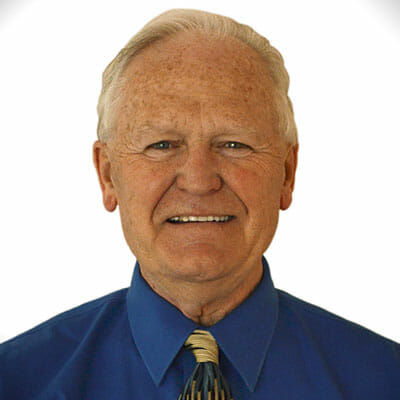
Dr. John Motl, M.D.
Dr. Motl is currently certified by the American Board of Psychiatry and Neurology in Psychiatry, and Board eligible in Neurology and licensed in the state of Arizona. He holds a Bachelor of Science degree with a major in biology and minors in chemistry and philosophy. He graduated from Creighton University School of Medicine with a Doctor of Medicine. Dr. Motl has studied Medical Acupuncture at the Colorado School of Traditional Chinese Medicine and at U.C.L.A.
Social Profile: LinkedIn
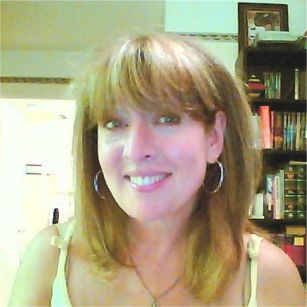
Diane is an avid supporter and researcher of natural mental health strategies. Diane received her medical writing and science communication certification through Stanford University and has published over 3 million words on the topics of holistic health, addiction, recovery, and alternative medicine. She has proudly worked with the Alternative to Meds Center since its inception and is grateful for the opportunity to help the founding members develop this world-class center that has helped so many thousands regain natural mental health.