

Alternative to Meds Editorial Team
Medically Reviewed by Dr John Motl MD
Table of Contents:
- Video: Antidepressant FAQs
- Learn Important Information About Luvox CR
- Common Luvox CR Withdrawal Symptoms
- Discover Strategies to Ease Coming off Antidepressants
- Video: SSRIs
- Improving Sleep Can Assist Luvox CR Withdrawal
- OCD and the Role of Nutrition in Recovery
- Why was Luvox Banned in Numerous Countries?
- Luvox CR — Black Box Label
- Clinical Trials on Luvox CR/fluvoxamine
- Learn More About LuvoxCR Withdrawal at Alternative to Meds Center
Finding root causes for symptoms is productive, not spending time finding the “correct label” for your situation. Designing the program that will work for your unique profile and situation is key. For this purpose, we call on the very best of our expertise, our medical staff’s knowledge, and our compassion for your well-being and recovery.
Ready for a Genuinely Effective Approach?
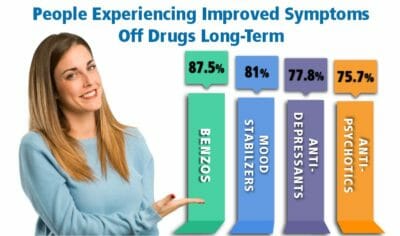
Thinking about coming off? Start with our complete guide to coming off antidepressants safely.
Learn Important Information About LuvoxCR®
Luvox CR is an SSRI antidepressant drug. (CR means it is controlled-release, meant to be taken once daily.)
IImmediate-release Luvox (fluvoxamine) was the very first SSRI medication to be brought to market. Fluoxamine was originally marketed in Switzerland in 1983 and came to the US in 1994. At the time, Luvox (IR) was described as a medication to treat depression, anxiety, OCD, and other psychiatric symptoms.2,12-14
Common LuvoxCR Withdrawal Symptoms
About half the patients who stop taking antidepressants/SSRIs experience withdrawal symptoms. Several studies have documented the symptoms that most commonly arise within a period of days after abrupt withdrawal of LuvoxCR and other SSRIs. Controlled-release SSRI LuvoxCR has a half-life of about 16 hours. The half-life of a drug is somewhat predictive of when withdrawals may start to first emerge. To compare, Prozac has an extremely long half-life of 3-5 days so it can take 2-3 weeks for withdrawals to emerge.21
Withdrawals may pass in a few weeks, but can also linger for several months or longer, according to research published in the Journal of Addictive Behaviors.20 Gradual withdrawal is recommended over weeks or even months to reduce their severity.
Since withdrawals from SSRIs can be vague and variable, and often overlap original and drug-induced side effects, physicians are liable to misdiagnose them as relapse phenomena.14,5,8,19 To help clarify this diagnostic problem, the mnemonic “F I N I S H” has been used to isolate the most common withdrawal symptoms, as shown below.
Common LuvoxCR withdrawal symptoms can include:

Flu-like symptoms — fatigue, lethargy, achiness, sweating, headache, nausea, vomiting
Insomnia, vivid dreams and nightmares, sleep disturbances
Nausea, vomiting
Imbalances, dizziness, vertigo, incoordination, lightheadedness
Sensory disturbances, shock-like sensations, burning, tingling
Hyperarousal, agitation, aggression, irritability, anxiety, mania, violence, jerkiness
Discover Strategies to Ease Coming Off Antidepressants
Collaborate with your prescribing physician or medical team. Don’t try it on your own. Since LuvoxCR is an extended-release SSRI, your prescriber may suggest switching to an immediate-release SSRI, for easier calculations of dose reductions. Prozac is often utilized in this way, as it has a much longer half-life. Ask your doctor can establish workable equivalent dosages for you to avoid unnecessary complications that can occur when switching antidepressants.
Take it slow. Gradual withdrawal has been found to be the most productive and the least traumatic way to come off antidepressant medication.14-16,20
Stabilize after each reduction. Even at a slow reduction pace, withdrawals may emerge that are uncomfortable. If withdrawals are more severe than are tolerable, work with your prescriber to go back up to a tolerable dose if necessary, and then allow enough time for these to subside before initiating the next reduction.22
Avoid alcohol, and recreational drugs, including cannabis. These agents can cause their own set of symptoms and can disrupt your LuvoxCR withdrawal process.3,23
Improving Sleep Can Assist LuvoxCR Withdrawal
Sleep disruptions are not uncommon during LuvoxCR withdrawal. Do what you can to help improve your sleeping environment. This may include a more ergonomic mattress and pillows, eliminating electronics from the bedroom, establishing regular sleep times, avoiding heavy meals just before retiring, and eliminating caffeine or other stimulants. Some find that light- and sound-blocking curtains and masks are also helpful in creating a good sleep environment.
OCD, Depression, and the Role of Nutrition in Recovery
In general, it has been found that OCD and other mental health sufferers have low levels of 12 specific nutrients in their diet. 6,7
These 12 specific nutrients act as natural antidepressants, and can be obtained as supplements or obtained through diet. Supplements include folate, long-chain omega-3 fatty acids, magnesium, iron, selenium, potassium, zinc, vitamin A, B1, B6, B12, and vitamin C.
Add foods to your daily diet to maximize these antidepressant nutrients, such as green leafy vegetables, cruciferous vegetables, peppers, organ meats, and seafood, especially mussels and oysters.
Why was Luvox Banned in Numerous Countries?
Luvox was banned in 2002 in the US, UK, and elsewhere. Public outcry and a massive overhaul of regulations of SSRIs followed the 1999 tragic Columbine school shooting. Records showed that the teenage shooter had been taking Luvox for a year prior to the school shooting incident. Consequently, Luvox was implicated in the student’s violent and erratic behavior. These concerns brought forth many international studies regarding the tendency of SSRI medications to provoke suicidal and violent behavior in youth.9-11,13,17,20
As time passed, by 2008 the drug manufacturer had modified the drug’s formula and changed it to a “CR” or controlled release version and resubmitted the request for approval not for treating depression or anxiety, but limited to treating OCD. Subsequently, the FDA did grant approval to prescribe Luvox CR to treat OCD (obsessive-compulsive disorder). The label does not strictly prohibit prescribing to the pediatric population but only says the smallest dose of LuvoxCR “may not be appropriate” for children, without further explanation.
Surprisingly, “fluvoxamine,” the immediate-release formula, remains on the WHO’s “essential medications” list for 2023, which recommends the drug for the treatment of depression, anxiety, and OCD.8
LuvoxCR — the Black Box Label
 It was after the Columbine disaster and related publicity and numerous clinical studies reporting about SSRIs being linked to suicides and violence, that the FDA ordered a “black box warning” on all SSRI antidepressants.9,10,11,17
Here is the current black box warning1 that shows on LuvoxCR‘s label:
WARNING: SUICIDALITY and ANTIDEPRESSANTS
See full prescribing information for complete boxed warning.
Increased risk of suicidal thinking and behavior in children,
adolescents, and young adults taking antidepressants for major
depressive disorder and other psychiatric disorders (5.1) ~FDA label LuvoxCR
Clinical Trials on LuvoxCR
Also of interest, NO clinical trials on LuvoxCR on children were ever reported according to the drug label.
However, two 10-week trials (no date given) were done on children aged 8-17 for up to 200mg daily of immediate-release Luvox. These trials reported “no treatment effect” for ages 8-12.
Regarding adult trials, 3 short trials on immediate-release Luvox were done on an adult population but do not indicate the trial dates. And, some adult patients from the short trials remained on IR Luvox for a longer period, but the results were not controlled or documented, as stated on the drug’s label information.
It is puzzling how the FDA could have been sufficiently informed about such a controversial drug, before granting its approval in 2008 with such little information to go on.
Learn More About LuvoxCR Withdrawal at Alternative to Meds Center
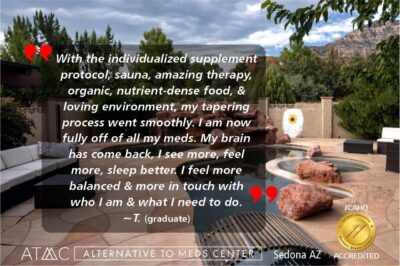 At Alternative to Meds Center, we’ve been helping people resolve over-medication, medication injury, and comfortable withdrawal management for LuvoxCR and other medications for just about two decades now. The methods we use allow our clients to attain and maintain natural mental wellness without relying on prescription medication for relief.
Our methods can be reviewed on the services overview pages for quick reference. In particular, we encourage you to read about the importance of lab testing, orthomolecular medicine, neurotransmitter rehabilitation, neurotoxin removal, IV + NAD treatments, and all the other types of therapies you can find there.
These are the methods we use to isolate root causes for unwanted symptoms. Then, with medically supervised treatments, including holistic detox and deep cleansing methods to free the body of neurotoxic elements, a unique program is designed to promote rebalancing and true recovery.
Our program is like no other on the planet, delivered in a beautiful, pristine residential setting. Please call us for more information and guidance, as well as how to find out about insurance coverage for you or your loved one. We welcome your call and look forward to speaking with you about the best ways forward for your particular situation and needs.
for Luvox Withdrawal Help
Resources:
1. FDA label Luvox CR (fluvoxamine maleate) Extended-Release Capsules for Oral Consumption [approval 2008] [cited 2026 April 14]
2. Brock H, Hany M. Obsessive-Compulsive Disorder. [Updated 2023 May 29]. In: StatPearls [Internet]. Treasure Island (FL): StatPearls Publishing; 2023 Jan-. Available from: https://www.ncbi.nlm.nih.gov/books/NBK553162/ [cited 2026 April 14]
3. Chick J, Aschauer H, Hornik K; Investigators’ Group. Efficacy of fluvoxamine in preventing relapse in alcohol dependence: a one-year, double-blind, placebo-controlled multicentre study with analysis by typology. Drug Alcohol Depend. 2004 Apr 9;74(1):61-70. doi: 10.1016/j.drugalcdep.2003.11.012. PMID: 15072808. [cited 2026 April 14]
4. Edinoff AN, Akuly HA, Hanna TA, Ochoa CO, Patti SJ, Ghaffar YA, Kaye AD, Viswanath O, Urits I, Boyer AG, Cornett EM, Kaye AM. Selective Serotonin Reuptake Inhibitors and Adverse Effects: A Narrative Review. Neurol Int. 2021 Aug 5;13(3):387-401. doi: 10.3390/neurolint13030038. PMID: 34449705; PMCID: PMC8395812. [cited 2026 April 14]
5. ShZou S, et al, Adverse effects of 21 antidepressants The Sleep Journal, published July 9, 2023 [cited 2026 April 14]
6. LaChance, L. R., & Ramsey, D. (2018). Antidepressant foods: An evidence-based nutrient profiling system for depression. World journal of psychiatry, 8(3), 97–104. https://doi.org/10.5498/wjp.v8.i3.97 [cited 2026 April 14]
7. Nguyen, T. P., Cribb, L., Ng, C. H., Byrne, G. J., Castle, D., Brakoulias, V., Blair-West, S., Oliver, G., Ee, C., Dean, O. M., Camfield, D. A., Bousman, C., Dowling, N., Roy, R., Berk, M., & Sarris, J. (2021). Dietary quality and nutrient intake in adults with obsessive–compulsive disorder. BJPsych Open, 7(6), e218. https://doi.org/10.1192/bjo.2021.1039 [cited 2026 April 14]
8. WHO List of Essential Medicines(2025) [cited 2026 April 14]
9. Lagerberg, T., Fazel, S., Molero, Y., Franko, M. A., Chen, Q., Hellner, C., Lichtenstein, P., & Chang, Z. (2020). Associations between selective serotonin reuptake inhibitors and violent crime in adolescents, young, and older adults – a Swedish register-based study. European neuropsychopharmacology : the journal of the European College of Neuropsychopharmacology, 36, 1–9. https://doi.org/10.1016/j.euroneuro.2020.03.024 [cited 2026 April 14]
10. Sharma T, Guski LS, Freund N, Gøtzsche PC. Suicidality and aggression during antidepressant treatment: systematic review and meta-analyses based on clinical study reports. BMJ. 2016 Jan 27;352:i65. doi: 10.1136/bmj.i65. PMID: 26819231; PMCID: PMC4729837. [cited 2026 April 14]
11. Hemminki E, Merikukka M, Gissler M, Wahlbeck K, Savolainen J, Ristikari T, Aaltonen M. Antidepressant use and violent crimes among young people: a longitudinal examination of the Finnish 1987 birth cohort. J Epidemiol Community Health. 2017 Jan;71(1):12-18. doi: 10.1136/jech-2016-207265. Epub 2016 Jun 28. PMID: 27354489. [cited 2026 April 14]
12. Ordacgi, L., Mendlowicz, M. V., & Fontenelle, L. F. (2009). Management of obsessive-compulsive disorder with fluvoxamine extended release. Neuropsychiatric disease and treatment, 5, 301–308. https://doi.org/10.2147/ndt.s3301 [cited 2026 April 14]
13. Irons J. (2005). Fluvoxamine in the treatment of anxiety disorders. Neuropsychiatric disease and treatment, 1(4), 289–299. [cited 2026 April 14]
14. Black DW, Wesner R, Gabel J. The abrupt discontinuation of fluvoxamine in patients with panic disorder. J Clin Psychiatry. 1993 Apr;54(4):146-9. PMID: 8486592. [cited 2026 April 14]
15. Mourad I, Lejoyeux M, Adès J. Evaluation prospective du sevrage des antidépresseurs [Prospective evaluation of antidepressant discontinuation]. Encephale. 1998 May-Jun;24(3):215-22. French. PMID: 9696914. [cited 2026 April 14]
16. Horowitz MA, Taylor D. Tapering of SSRI treatment to mitigate withdrawal symptoms. Lancet Psychiatry. 2019 Jun;6(6):538-546. doi: 10.1016/S2215-0366(19)30032-X. Epub 2019 Mar 5. PMID: 30850328. [cited 2026 April 14]
17. Torejson I, Study links SSRIs to violent crime in young adults BMJ 2015;351:h4945 [published 16 September, 2015] [cited 2026 April 14]
18. Gabriel, M., & Sharma, V. (2017). Antidepressant discontinuation syndrome. CMAJ : Canadian Medical Association journal = journal de l’Association medicale canadienne, 189(21), E747. https://doi.org/10.1503/cmaj.160991 [[cited 2026 April 14]
19. Fava GA, Gatti A, Belaise C, Guidi J, Offidani E. Withdrawal Symptoms after Selective Serotonin Reuptake Inhibitor Discontinuation: A Systematic Review. Psychother Psychosom. 2015;84(2):72-81. doi: 10.1159/000370338. Epub 2015 Feb 21. PMID: 25721705. [cited 2026 April 14]
20. Davies J, Read J. A systematic review into the incidence, severity and duration of antidepressant withdrawal effects: Are guidelines evidence-based? Addict Behav. 2019 Oct;97:111-121. doi: 10.1016/j.addbeh.2018.08.027. Epub 2018 Sep 4. PMID: 30292574. [cited 2026 April 14]
21. Wisner Baum Worst Offenders [PDF page 83,84 published online N.D.] [cited 2026 April 14]
22. Cooper RE, Ashman M, Lomani J, Moncrieff J, Guy A, Davies J, Morant N, Horowitz M. “Stabilise-reduce, stabilise-reduce”: A survey of the common practices of deprescribing services and recommendations for future services. PLoS One. 2023 Mar 15;18(3):e0282988. doi: 10.1371/journal.pone.0282988. PMID: 36920968; PMCID: PMC10016688. [cited 2026 April 14]
23. Hoch E, Volkow ND, Friemel CM, Lorenzetti V, Freeman TP, Hall W. Cannabis, cannabinoids and health: a review of evidence on risks and medical benefits. Eur Arch Psychiatry Clin Neurosci. 2025 Mar;275(2):281-292. doi: 10.1007/s00406-024-01880-2. Epub 2024 Sep 19. PMID: 39299947; PMCID: PMC11910417. [cited 2026 April 23]
Originally Published September 1, 2023 by Diane Ridaeus
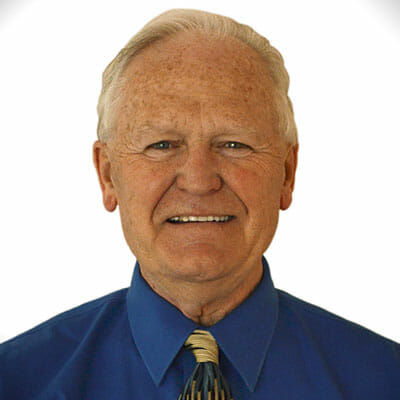
Dr. John Motl, M.D.
Dr. Motl is currently certified by the American Board of Psychiatry and Neurology in Psychiatry, and Board eligible in Neurology and licensed in the state of Arizona. He holds a Bachelor of Science degree with a major in biology and minors in chemistry and philosophy. He graduated from Creighton University School of Medicine with a Doctor of Medicine. Dr. Motl has studied Medical Acupuncture at the Colorado School of Traditional Chinese Medicine and at U.C.L.A.
Social Profile: LinkedIn

Diane is an avid supporter and researcher of natural mental health strategies. Diane received her medical writing and science communication certification through Stanford University and has published over 3 million words on the topics of holistic health, addiction, recovery, and alternative medicine. She has proudly worked with the Alternative to Meds Center since its inception and is grateful for the opportunity to help the founding members develop this world-class center that has helped so many thousands regain natural mental health.