

Alternative to Meds Editorial Team
Medically Reviewed by Dr John Motl MD
Table of Contents:
- Video: Antipsychotics FAQs
- Information About Saphris
- What is Saphris Approved to Treat?
- Does Every Person with Schizophrenia Symptoms Need Long-Term Antipsychotics?
- What are the Short-Term Side Effects?
- What are Saphris Long-Term Effects?
- Saphris Drug-Drug Interactions to Watch For
- More Information on Saphris Long-Term Effects
- Saphris Long-term Effects FAQs
For those considering starting to take Saphris this article may be helpful to understand more about what to expect, and to learn some points of caution. For those who have taken this drug for some time, perhaps now is the time to speak with your prescriber and discuss any concerns you may have, and also to explore alternatives that may serve your needs better.
Information About Saphris
Saphris is an antipsychotic medication that was first marketed in 2009. Saphris is FDA-approved for the treatment of schizophrenia and mixed episodes of bipolar 1. The generic name for Saphris is asenapine. Trial outcomes have varied results. In some long-term clinical trials, (13 weeks) Saphris was found better than placebo at reducing certain symptoms of schizophrenia or schizoaffective disorders. However, another trial compared asenapine to a control drug, olanzapine, and found asenapine (Saphris) was associated with more adverse side effects at one year follow-up. One trial extension found asenapine more effective than olanzapine for reducing some symptoms. It would seem more trials are needed for increased certainty of long-term outcomes, since variable results were found again after an extension of the trial, which lasted an additional (and client-variable) number of months up to almost 3 years in total. Intramuscular versions of antipsychotics, i.e., Secuado, were excluded from this double-blinded trial.1,2,6-8
 Saphris oral is taken sublingually, that is, dissolved under the tongue and not chewed, swallowed, cut, or crushed. The tablet dissolves in saliva nearly instantly. Dosage is typically 5-10mg twice daily, for adults, to a maximum of 20mg per day. For children, from age 10-17, the dosage is half that, administered in 2.5mg tablets. The tablets are flavored with black cherry and sweetened with sucralose. It is not uncommon for the drug to leave an unpleasant taste in the mouth, and a sensation of numbness is commonly reported in the mouth and sometimes throat for a period of time after administration. Blisters, peeling, ulcers, and inflammation in the mouth have also been reported. Instructions are given on the drug label not to eat or drink anything for 10 minutes.1,2
Asenapine is also available in a slow-release patch form (Secuado) that is applied every 24 hours to the skin of the upper back, hip, upper arm, or abdomen.
Both Saphris and Secuado have an FDA-mandated black box warning on the drug packaging, indicating that the drug should not be prescribed to elderly dementia patients, because of an increased risk of death. This black box warning for Saphris is the same one that is applied to virtually all other antipsychotic medications.
What is Saphris Approved to Treat?
Saphris is approved for the treatment of schizophrenia and manic or mixed episodes in bipolar 1 conditions. The drug label states that its exact mechanisms of action are unknown.
The drug label suggests that Saphris possibly alters the expression of dopamine and might also alter other hormones/neurotransmitters such as serotonin, adrenaline, and histamine. This is the same mechanism of action the FDA suggests, but does not confirm, in describing ALL antipsychotics.
Does Every Person with Schizophrenia Symptoms Need Long-term Antipsychotic Medication?
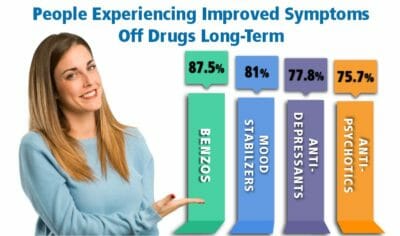
It is important to note that some people with schizophrenia seem to do better without long-term medication. This is one reason why personalized assessments and treatment is necessary for such a complex diagnosis as schizophrenia.11,13,14
What are the Short-Term Side Effects of Saphris?
Saphris is associated with a long list of side effects that were observed during short-term trials. Because of the length of such a list, only the most serious Saphris or Secuado side effects are shown below.3-5
Summary of the serious short-term side effects of Saphris:
 Seizures
- NMS (neuroleptic malignant syndrome)
- Akathisia
- Tardive dyskinesia, extrapyramidal movement disorders (very common, at 25%)
- Involuntary movements of muscles, trembling, twisting, shaking
- Tongue rolling, involuntary protrusion
- Heart arrhythmias, tachycardia, high blood pressure, low blood pressure
- Anaphylaxis (life-threatening allergic reactions)
- Difficulty breathing, speaking
- Inability to swallow
Mild to moderate short-term effects can include:
- Numbness of the mouth for the oral sublingual tablet including the lips, tongue, cheeks, gums
- Numbness, burning, irritation of the patch site for the transdermal version of Saphris
- Nausea
- Fatigue, somnolence
- Dizziness
- Increased appetite
- Weight gain
Because of the way Saphris can slow down or confuse a person’s thoughts, reaction time, and muscular coordination, it is not recommended to drive or operate heavy machinery while taking this drug.1
What are Saphris Long-Term Effects?
 It is possible that any short-term effect over time may persist as long as one is taking the drug. However, there are certain long-term effects Saphris is particularly known to be associated with as these have been reported to the FDA’s adverse drug event reporting portal.
An important risk to know about is movement disorders. In particular, it is known that the likelihood of developing tardive dyskinesia increases with the length of time the antipsychotic drug is taken.
To understand the mechanisms involved in developing Saphris long-term side effects, one can look at how the drug can affect neurotransmission and internal body organs and systems over time. A prime example is how Saphris can damage the liver. It can take a long time to injure the liver, and once that has occurred, the condition may be unable to be reversed, and may become life-threatening.
The same is true for a lowered white blood cell count, which is something that can occur soon after starting to take Saphris. Over time, this may lead to increased risk for infections, and one’s immune system may become weakened more and more. This would be putting general health at greater risk, the longer one continues taking the drug.
In summary, some of the risks of taking Saphris long-term can include:
 Tardive dyskinesia
- Severe liver damage
- Recurring infections, slow to heal from infection
- Compromised immune system
- Leukopenia, neutropenia, agranulocytosis (lowering of types of white blood cells)
- Note: drop in white blood cell count can be fatal so WBC should be checked frequently while taking Saphris
- Daily transdermal patches may inflame the skin, especially since the places the patch can be placed are limited to the abdomen, hips, upper arm, and upper back
- Cerebrovascular injuries, i.e., stroke
- Impaired cardiac function, i.e., QT prolongation, tachycardia, arrhythmias, cardiac lesions, sudden cardiac death, also called antipsychotic cardiotoxicity
- Low blood pressure (orthostatic hypotension)
- High blood pressure (hypertension)
- Dizziness, feeling faint or lightheaded when standing up
- Hyperglycemia, weight gain
- Diabetes
- Antipsychotic-induced hyperprolactinemia (can lead to enlarged male breasts, breast discharge, infertility, menstrual irregularities in females)
These may not be all of the long-term effects of Saphris. If you experience an adverse reaction you can report it to the FDA adverse drug reaction portal. By doing so, you may be helping others in the future.10
Saphris Drug-Drug Interactions to Watch For
Especially when taking Saphris long-term, be sure to advise your prescriber and caregivers if other drugs are taken as these may cause an adverse effect to occur. One drug may increase the metabolism of Saphris, while another may slow it, or vice versa. For example, taking Paxil and Saphris together requires the Paxil dose be cut in half to avoid Paxil overdose. Taking fluvoxamine and Saphris transdermal together slows the metabolism rate of Saphris, so for safety, the Saphris dosage would have to be cut. Ask your prescriber or caregiver to assist with any dose reductions or changes in medication. It is not possible to simply cut the patch for a lesser dose.
Of particular risk are medications that affect cardiac function, are hard on the liver, may increase prolactin levels, affect blood sugar levels or white blood cells, and many others. Always make sure to discuss with your prescriber all the drugs you are taking to avoid these problems.
Here are some drugs to avoid 7,12,15 whether taking Saphris long-term or short-term:
- Antidepressants such as Paxil, Fluvoxamine
- Beta-blockers (drugs used to treat low blood pressure)
- Alpha-blockers (drugs used to treat high blood pressure)
- ACE inhibitors (drugs used to treat high blood pressure)
- Drinking alcohol is not recommended due to over-sedation effects
- Smoking marijuana, use of THC is associated with psychosis and relapse
- Stimulant use including caffeine
More Information on Saphris Long-term Effects
Please visit these additional sources of information to learn more about the possible long-term effects of Saphris, and alternatives that could be useful to consider discussing with your prescriber:
for Help with Saphris Long-Term Effects
Saphris Long-Term Effects FAQs
Sources:
1. FDA drug label Saphris (asenapine) sublingual tablets appr. 2009 [cited 2026 Feb 12]
2. FDA drug label Secuado (asenapine) transdermal system approval 2009 [cited 2026 Feb 12]
3. Li XQ, Tang XR, Li LL. Antipsychotics cardiotoxicity: What’s known and what’s next. World J Psychiatry. 2021 Oct 19;11(10):736-753. doi: 10.5498/wjp.v11.i10.736. PMID: 34733639; PMCID: PMC8546771. [cited 2026 Feb 12]
4. Jiang Q, Li T, Zhao L, Sun Y, Mao Z, Xing Y, Wang C, Bo Q. Treatment of antipsychotic-induced hyperprolactinemia: an umbrella review of systematic reviews and meta-analyses. Front Psychiatry. 2024 Mar 5;15:1337274. doi: 10.3389/fpsyt.2024.1337274. PMID: 38505795; PMCID: PMC10948402. [cited 2026 Feb 12]
5. Haddad PM, Wieck A. Antipsychotic-induced hyperprolactinaemia: mechanisms, clinical features and management. Drugs. 2004;64(20):2291-314. doi: 10.2165/00003495-200464200-00003. PMID: 15456328. [cited 2026 Feb 12]
6. Plosker GL, Deeks ED. Asenapine: A Review in Schizophrenia. CNS Drugs. 2016 Jul;30(7):655-66. doi: 10.1007/s40263-016-0363-2. PMID: 27356921. [cited 2026 Feb 12]
7. Huhn, M et al., Comparative efficacy and tolerability of 32 oral antipsychotics for the acute treatment of adults with multi-episode schizophrenia: a systematic review and network meta-analysis The Lancet, Volyume 394, Issue 10202, 939-951 [cited 2026 Feb 12]
8. Schoemaker J, Stet L, Vrijland P, Naber D, Panagides J, Emsley R. Long-term efficacy and safety of asenapine or olanzapine in patients with schizophrenia or schizoaffective disorder: an extension study. Pharmacopsychiatry. 2012 Jul;45(5):196-203. doi: 10.1055/s-0031-1301310. Epub 2012 Mar 27. PMID: 22454251. [cited 2026 Feb 12]
10. FDA Adverse Event Reporting System published online since Jan 2004 [cited 2026 Feb 12]
11. Rappaport M, Hopkins HK, Hall K, Belleza T, Silverman J. Are there schizophrenics for whom drugs may be unnecessary or contraindicated? Int Pharmacopsychiatry. 1978;13(2):100-11. doi: 10.1159/000468327. PMID: 352976. [cited 2026 Feb 12]
12. Wang HR, Woo YS, Bahk WM. Caffeine-induced psychiatric manifestations: a review. Int Clin Psychopharmacol. 2015 Jul;30(4):179-82. doi: 10.1097/YIC.0000000000000076. PMID: 25856116. [cited 2026 Feb 12]
13. Gleeson, J. “A randomized controlled trial of relapse prevention therapy for first-episodepsychosis patients.” Schizophrenia Bulletin 39 (2013):436-48. [cited 2026 Feb 12]
14. Gleeson, J. “A randomized controlled trial of relapse prevention therapy for first-episodepsychosis patients.” Schizophrenia Bulletin 39 (2013):436-48. [cited 2026 Feb 12]
15. Hasan A, von Keller R, Friemel CM, Hall W, Schneider M, Koethe D, Leweke FM, Strube W, Hoch E. Cannabis use and psychosis: a review of reviews. Eur Arch Psychiatry Clin Neurosci. 2020 Jun;270(4):403-412. doi: 10.1007/s00406-019-01068-z. Epub 2019 Sep 28. PMID: 31563981. [cited 2026 Feb 12]
16. Rubio JM, Taipale H, Tanskanen A, Correll CU, Kane JM, Tiihonen J. Long-term Continuity of Antipsychotic Treatment for Schizophrenia: A Nationwide Study. Schizophr Bull. 2021 Oct 21;47(6):1611-1620. doi: 10.1093/schbul/sbab063. PMID: 34129663; PMCID: PMC8530382.[cited 2026 Feb 12]
17. Wunderink L, Nieboer RM, Wiersma D, Sytema S, Nienhuis FJ. Recovery in remitted first-episode psychosis at 7 years of follow-up of an early dose reduction/discontinuation or maintenance treatment strategy: long-term follow-up of a 2-year randomized clinical trial. JAMA Psychiatry. 2013 Sep;70(9):913-20. doi: 10.1001/jamapsychiatry.2013.19. PMID: 23824214.[cited 2026 Feb 12]
18. Chouinard G, Samaha AN, Chouinard VA, Peretti CS, Kanahara N, Takase M, Iyo M. Antipsychotic-Induced Dopamine Supersensitivity Psychosis: Pharmacology, Criteria, and Therapy. Psychother Psychosom. 2017;86(4):189-219. doi: 10.1159/000477313. Epub 2017 Jun 24. PMID: 28647739.[cited 2026 Feb 12]
19. Schoeler T, Ferris J, Winstock AR. Rates and correlates of cannabis-associated psychotic symptoms in over 230,000 people who use cannabis. Transl Psychiatry. 2022 Sep 6;12(1):369. doi: 10.1038/s41398-022-02112-8. PMID: 36068202; PMCID: PMC9448725.[cited 2026 Feb 12]
20. Carton L, Cottencin O, Lapeyre-Mestre M, Geoffroy PA, Favre J, Simon N, Bordet R, Rolland B. Off-Label Prescribing of Antipsychotics in Adults, Children and Elderly Individuals: A Systematic Review of Recent Prescription Trends. Curr Pharm Des. 2015;21(23):3280-97. doi: 10.2174/1381612821666150619092903. PMID: 26088115.[cited 2026 Feb 12]
21. Horowitz MA, Jauhar S, Natesan S, Murray RM, Taylor D. A Method for Tapering Antipsychotic Treatment That May Minimize the Risk of Relapse. Schizophr Bull. 2021 Jul 8;47(4):1116-1129. doi: 10.1093/schbul/sbab017. Erratum in: Schizophr Bull. 2023 Mar 15;49(2):533. doi: 10.1093/schbul/sbac080. PMID: 33754644; PMCID: PMC8266572.[cited 2026 Feb 12]
Originally Published February 12, 2026 by Diane Ridaeus

Dr. John Motl, M.D.
Dr. Motl is currently certified by the American Board of Psychiatry and Neurology in Psychiatry, and Board eligible in Neurology and licensed in the state of Arizona. He holds a Bachelor of Science degree with a major in biology and minors in chemistry and philosophy. He graduated from Creighton University School of Medicine with a Doctor of Medicine. Dr. Motl has studied Medical Acupuncture at the Colorado School of Traditional Chinese Medicine and at U.C.L.A.
Social Profile: LinkedIn

Diane is an avid supporter and researcher of natural mental health strategies. Diane received her medical writing and science communication certification through Stanford University and has published over 3 million words on the topics of holistic health, addiction, recovery, and alternative medicine. She has proudly worked with the Alternative to Meds Center since its inception and is grateful for the opportunity to help the founding members develop this world-class center that has helped so many thousands regain natural mental health.