How Has the Pharmaceutical Industry Changed Over the Years?
The increase in prescription drug use and the presence of new medications on the market have made it more difficult for society including its physicians to determine whether these drugs are helping individuals. However, by exploring the common questions that arise when discussing the ways prescription medication has changed and how the pharmaceutical industry has changed over the years, we begin to see important details that people should be aware of so they can make informed decisions.
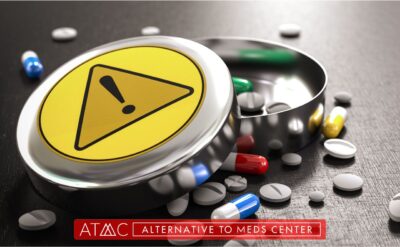 Pharmaceutical companies have been criticized for their role in increasing prescription drug use. To increase profit, some of these companies have misled consumers about the benefits vs risks of prescription medication, leading to an increase in prescriptions. Look no further than the thousands of lawsuits against companies that produced opioids for contributing to a drug addiction crisis in our society.
Additionally, pharmaceutical companies spend exorbitant amounts of money on lobbying efforts to allow them to extend the “approved” use of medication, to expand their target markets, regardless of potentially dangerous drug interactions and risk of adverse effects.
Recent trends have clearly shown a shift in the industry where profits are prioritized over people’s health and well-being. These include the increased prices of prescription drugs, increased recommendation of prescription drugs, censoring and overlooking natural and holistic health care, and an increase in targeted lobbying in favor of prescription drugs.
Prescription Drug Prices Increase Year After Year
Why are prescription drugs rising? Prescription drug prices have been on the rise for years. People forced into a corner by overpriced prescriptions may not have insurance that covers everything, yet they feel pressured to obtain what are sometimes inexplicably expensive medications.
Some reasons prices are increasing may include:
- The pharmaceutical industry is profit-driven, even beyond patient health concerns18
- Lack of competition for brand-name drugs, allowing companies more power to increase prices without losing customers
- Intense lack of transparency about drug prices
- Increase in mergers and acquisitions among pharmaceutical companies that reduce competitiveness in the market
- Government programs that do not negotiate the cost of prescription medicine
- Because consumer education is inadequate concerning alternative treatments
Prescription Medicine Is Seen as the First Line of Treatment
Physicians are trained to treat symptoms or illness instead of addressing root causes for symptoms. This is a shift from traditional wisdom in medicine that utilized natural treatments. Today’s pharmaceutical industry has pretty well monopolized the practice of medicine.
The result is that individuals are heavily encouraged to use prescription medication to treat symptoms that could have been eased by a healthy lifestyle, change in diet, clearing out neurotoxic accumulations, or other simple, safe, natural remedies.
It is true that in certain cases, the only remedy that can avert the crisis is going to be a prescription drug. In the majority of cases that seek medical help, the first line of treatment is going to be a prescription drug even though much less toxic remedies could have been provided.
We Have Become an Overly Prescribed Society
In recent decades, we have seen a significant increase in the number of prescriptions being written. Drug advertising is everywhere, sending people to doctors and asking for specific medications to treat their symptoms. Prescription drugs are even promoted openly in TV shows, movies and popular songs. Western civilization, in particular, has become a culture of prescription drug use. But the over-prescription of drugs is fast becoming a global problem.
The increase in prescriptions could be a result of:
- Voluminous advertising budgets of pharmaceutical companies that spend $billions marketing their drugs. Documentation shows, time after time, that pharmaceutical. companies have used deceptive marketing practices to convince people that their medication is the best option.
- Lack of information given to patients about affordable natural remedies for healthy lifestyles, such as fitness or dietary changes.
- Absence of education in medical schools on the benefits of lifestyle medicine, favoring prescription medication as the exclusive first-line treatment.
- Drug makers funding the majority of clinical trials may introduce bias
- Drug companies fund medical universities, who train future drug prescribers.18
Increased Regulations As a Result of Lawsuits
Despite censorship or denial, sometimes an issue becomes so serious that it cannot be ignored. Such is the case with pharmaceutical companies. While drug makers have been able to operate without much stringent oversight for decades, they have recently been placed under increased scrutiny as a result of lawsuits and increased government regulation.
The published CDC statistics showing that one of every 2 people in the US takes prescription drugs,14 shows just how dire the situation has become and how vital it is that it be addressed. Increased awareness of medication errors and litigation over drug damage have seen the Food and Drug Administration stepping up its efforts to monitor the pharmaceutical industry and improve its practices.15
Some of the most common regulations in place today include:
- Regulatory efforts to crack down on deceptive marketing tactics by pharmaceutical companies
- Requirements for pharmaceutical companies to disclose the actual cost of a drug, including research and development costs as well as marketing dollars that go into promoting their product
- More transparency in clinical trials by pharmaceutical companies, which must register all drug studies with the government and share their findings publicly
A Society That Values Quick Results Over Patients’ Long-Term Health Goals
We are a society that values quick results. We want our pain gone by the time we leave the doctor’s office, but this quick-fix “band aid” approach is not always the best approach. Patients are often given medications to treat symptoms without any information on non-drug-based therapeutics.
Doctors, perhaps under time constraints, are prescribing more medication than ever before, but they aren’t teaching patients how to effectively manage their symptoms through lifestyle or diet or exercise or other changes and drug-free alternative treatments. They simply are not trained to do so in medical school. We have a perfect storm of increasing influence of the pharmaceutical industry and the lack of education on the benefits of lifestyle medicine.
Ease of Virtual Access to On-Demand Physicians
The rise of telemedicine has made it easier than ever for people to access physician services.9 Vital health care can be easily accessed through a simple video call with an on-demand physician. This makes it simple for people to get a diagnosis by explaining their symptoms and receiving a prescription for the appropriate treatment, without setting foot in a doctor’s office.9
Especially in these times, the advancement of telemedicine has been advantageous for providing health care access to populations that struggle to get to a facility, but it can serve as a double-edged sword, if one is only seeking a quick-fix prescription. Thankfully, there are also tele-physicians who offer thorough consultations leading to more comprehensive treatment options where these might serve the patient better.
Contact Us for a Better, Healthier Version of You … Naturally!
 Prescription medication has changed over time, but not all changes are for the better. Pharmaceutical companies have shifted the medical industry in ways that prioritize profits over patient health.
If you’re looking for natural treatment options, you may wish to consult Alternative to Meds Center, where medically trained physicians, naturopathic physicians, and nutritional psychiatry are fundamental pillars of our programs for mental health recovery, safe medication withdrawal, and addiction treatment. Naturopaths and holistic medical practitioners are trained to provide patients with the tools they need to regain their natural mental health. A naturopathic physician will work with you to find the root cause of your symptoms rather than prescribing potentially injurious drugs that can only temporarily mask symptoms, and in fact, sometimes even worsen a person’s condition. We are here to help. Please call us at Alternative to Meds Center for more information on safe alternatives for natural mental health and how our inpatient programs may be the answer you have been looking for.

 In modern times, marketing strategy for increased sales has been the keynote of the pharmaceutical industry. By the mid-1990s, pharmaceutical companies had developed new opioid medications that were marketed as non-addictive. Drug manufacturer Purdue spent $200 million in a single year to aggressively promote OxyContin© as a non addictive painkiller, becoming a near overnight blockbuster drug, profiting from $multi-billions in sales. These drugs were being advertised heavily to doctors and the public at large. In the early 2000s, painkillers became a significant part of American culture and became more widely available to the public. However, in 2007 Purdue was criminally charged, though no one went to jail, and paid a mere $437 million in fines for their misleading advertising claims, and after deaths from prescribed opioids rose to the top of the leading causes of death in the US. Apparently this was not enough to bring about change in practices, as Purdue also plead guilty to fraud and kickback charges in 2020, leading to the dissolution of the company. And yet again, no one went to jail.4,6-8,13,14,18,19