
Over the past 2 decadesAlternative to Meds Editorial Team
Medically Reviewed by Dr Michael Loes MD
Table of Contents:
- Klonopin Withdrawal Symptoms
- Videos: Benzo FAQs
- What is Klonopin Used For?
- Klonopin, clonazepam, Other Names and Slang
- Klonopin Adverse Effects
- Discontinuing Klonopin Safely
- Klonopin Withdrawal FAQs
- Treatment for Klonopin Dependence
- Does Removal of Neurotoxins Aid in Klonopin Withdrawal?
- Effects of Food Additives on Neurochemistry
- Why Consider Inpatient Klonopin Withdrawal at ATMC?
Klonopin (clonazepam) Withdrawal Symptoms
Have Klonopin withdrawals kept you held hostage for too long? Although clonazepam, sold under the trade name Klonopin© is considered a long-acting benzodiazepine, it still needs to be discontinued carefully and gradually enough to give the body time — adequate time — to adjust to a decreasing dosage. As you are likely aware, coming off benzodiazepines can cause horrific misery. Stopping too abruptly can be life-threatening. Many have described coming off Benzos as harder to withdraw from than heroin or other opiates. It can’t be emphasized too clearly that Klonopin withdrawal must be done extremely gradually, with adequate support, for a successful outcome.2,5
Klonopin withdrawals can include:
- Sleep disturbances, rebound insomnia, nightmares 7-11
- Heart palpitations, muscle spasms, tics, jerking motions, tremors, seizures that do not stop* 1,7-9,19
- Suicidality, worsened depression, extreme melancholy 1,8
- Increased anxiety, newly emerging or rebound panic attacks, rebound anxiety, paranoia 1,7-11,19
- Abnormal sense distortions, sensory hypersensitivity, hyperosmia (overwhelming sensitivity to smell) 8,32
- Patches of numbness, tingling, heat or cold, itching, feelings of electric shock 19
- Visual or perception disturbances, blurred vision, tilting walls or floors 7,8,19
- Mania, delusions, hallucinations, delirium, psychotic reactions, catatonia in the elderly 1,7,8,12,32
- Mood swings, irritability, hostility, aggressiveness, anger 1,8
- Restlessness, compulsions, agitation, pacing, marching, and other repetitive involuntary muscle motions1,8
- Vertigo, faintness, dizziness, lightheadedness, tinnitus 8,20,32
- Nausea, stomach pain, appetite changes, metallic taste, anorexia, dry retching, cramps 1,7,8,32
- Confusion, mental fog, disorientation, unreality, depersonalization, de-realization 8,12,31.32
- Shooting pains in the spine, neck, and muscle pain 8
- Stiffness/tension in the neck, jaw, feet, hands, limbs, back, scalp, forehead, postural hypotension 8,19,32
- Weakened immune system 19
- Flu-like symptoms, headache, sweating 7,8
*The FDA has issued warnings concerning the risk for status epilepticus1 that may emerge during clonazepam withdrawal. Grand mal seizures and seizures that do not stop have been documented with abrupt benzodiazepine withdrawal.8,13
Clonazepam, like all benzodiazepines, can manifest nasty withdrawal complications, often far worse than heroin. Yet, according to the DEA, as a schedule IV drug,6 Klonopin has “a low potential for abuse and low risk of dependence.” That would be laughable if it wasn’t such a tragic misrepresentation that then gets conveyed to unsuspecting patients.1,9,33
Do Your Symptoms Require Klonopin?
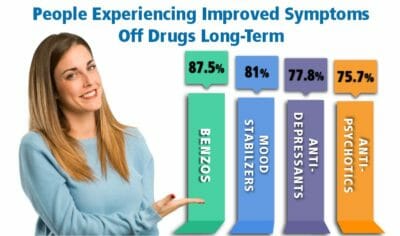
Clearing accumulated toxins assists with the withdrawal and can also provide lasting relief after the clonazepam withdrawal is complete. While some people need only gradual discontinuation strategies, others are neurotoxic. This means their neurochemistry may have gone into overdrive or some other dysfunction. Simply reducing the dose will not be enough to restore health. Techniques are needed that lessen that toxic burden before they can expect to find relief without the drugs. Each person’s profile has to be addressed in all its unique detail. That is how we are able to effectively relieve and resolve these unwanted symptoms for long-lasting relief during and after clonazepam withdrawal.
What is Klonopin (clonazepam) Used For?
Clonazepam or Klonopin is a prescribed medication in the benzodiazepine class, which the FDA describes as a long-acting, high-potency benzodiazepine with anti-convulsive and anxiolytic, sedative properties.7,8
Please note that clonazepam is FDA-approved to treat 2 disorders: seizure and panic disorders (in adults and children) and even these were not tested beyond 9 weeks in clinical pre-trials.1
Benzodiazepine Overprescription
A study reviewed the patterns of off-label prescribing over the course of a year in a psychiatric outpatient setting. Out of 250 participants receiving a prescription medicine,198 were prescribed an off-label medication. The most prevalent medication prescribed was clonazepam. That the study occurred in a teaching hospital makes these findings all the more disturbing.37
A wide survey of medical literature on the subject reports a VAST number of common off-label uses (not approved by the FDA or other drug regulators) for Klonopin, as shown below.13,14,21,37,38
Off Label Uses for Klonopin include:
- Depression
- Anxiety Disorders (a group of mental disorders characterized by episodes of stress, worry, fretting, social anxiety disorder, etc.)
- OCD (a psychiatric condition where a person feels compelled to repeat actions or words or patterns to avoid the anxiety that presents if these actions are not performed).35
- PTSD (post-traumatic stress disorder, after an event characterized by terror, the threat of death, or similar, where these past events can be triggered in the present by certain environmental reminders, recreating the sense of terror or shock, etc., from the past experience).
- Mania (a psychiatric condition characterized by a flight of ideas, illusions, feelings of superhuman ability, euphoria, power, etc.)
- Restless legs
- Tardive Dyskinesia
- Insomnia, REM sleep behavior disorder
Klonopin, clonazepam, Other Names, and Slang
Clonazepam is a generic drug sold under brand names such as Klonopin, or Rivotril.36 According to the DEA, street names for benzodiazepines include “downers,” “nerve pills,” “tranks,” and “benzos.” Klonopin is one of the top five benzodiazepines available on the street. Other names for Klonopin according to the Dept. of Consumer Protection include “KPins, Pins, K-cuts,” or “super Valium” when sold on the street.15,16
The drug has become somewhat popularized not only as a fast-acting sedative drug, but also for its near-immediate euphoric effects, and is considered a drug of high risk for abuse and addiction.1,33,37 The broad medical consensus now advises that benzodiazepines should only be taken for short-term use because of the rapid onset of dependence and addiction. Recommendations from the Ashton research materials advise doctors to prescribe for 1-7 days up to a maximum of 2-4 weeks.17
The British Journal of Pharmacology concurs and says that benzodiazepines should not be a first-line treatment choice — but where they are prescribed, they should only be used short-term. As one might expect then, many people have become inadvertently addicted to benzodiazepines like Klonopin, and may even resort to obtaining them off the street in a desperate attempt to prevent the drug’s horrific withdrawals.15,16.18
Klonopin Adverse Effects
The negative effects of Klonopin can be drastic and severe and can significantly wipe out any benefits. Though the advice is often ignored, medical consensus advises that a doctor should prescribe benzodiazepines for only short-term use because symptoms can paradoxically worsen over time.9,18,21-23,37
Common negative effects of Klonopin can include:
- Respiratory depression, respiratory arrest, slowed or difficult breathing, contraindicated in persons with sleep apnea.
- Depression
- Increased anxiety
- Euphoria
- Flu-like symptoms, such as a runny nose, fever, diarrhea, etc.
- Increased risk of Alzheimer’s disease
- Increased risk of pneumonia in older adults and other age groups
- Insomnia, disturbed sleep, strange dreams
- Difficulty speaking, slurred speech
- Unsteady or slow movements
- Motor movement disorders, akathisia, restlessness, pacing, marching, rocking, etc.
- Sedation, tiredness, drowsiness
- Vision becomes blurred, double vision, cyclic eyelid movement, difficulty focusing
- Headaches
- Dry mouth
- Excessive salivation
- Reduced appetite
- Sore gums
- Constipation
- Memory loss
- Cognitive impairment
- Confusion, becoming disoriented
When benzodiazepines are mixed with other CNS depressants such as opioids, alcohol, or others, the synergistic effects can become much more severe and can be fatal. The FDA has placed a black box warning on benzodiazepines to alert consumers about the potentially deadly interactions of clonazepam with opioids and other medications.1,37
Discontinuing Klonopin Safely
No matter how badly one wants to stop taking it, clonazepam withdrawal should never be abrupt, or “cold turkey.” When this drug, like other similar medications, is withdrawn all at once, or too fast, Klonopin withdrawal symptoms can turn on that are extremely harsh and hard to withstand, and can even cause death.37 Coming off too fast may also cause some symptoms to linger for a very long time (as in protracted withdrawal) and can lead to relapse because of their intensity.
Aim to do a gentle gradual withdrawal from the drug under medical supervision. Please remember, benzodiazepines can cause seizures and even death from suddenly stopping, especially after taking them for more than a few weeks.1,17-19,37
When the time comes to begin the withdrawal process, we strongly recommend an inpatient treatment setting that can provide close and careful medical monitoring as well as compassionate care.
Klonopin Withdrawal FAQs
Below you will find more information on clonazepam (Klonopin), and some topics people ask us about withdrawal from Klonopin.
How Long Do Klonopin Withdrawal Symptoms Last?
 Many people choose inpatient care. Trying to keep working or going to school while at the same time trying to get through clonazepam withdrawal would be exhausting, and next to impossible for many. In any case, take time to focus on rest and recovery. If inpatient care is not possible, ask your prescriber to guide you through. If your prescriber is unable to help, find one who is familiar with managing precise gradual withdrawal over time.
Clinical studies show that clonazepam withdrawal seems to occur in three stages of intensity. The first stage begins with the onset of symptoms which may start hours or days after the last dose.
From around days 1 to 4, “rebound symptoms” can start. These include increased anxiety, worsened depression, pain, tension, other physical manifestations, and disturbed sleep. Where a doctor prescribed a Benzo for insomnia, rebound insomnia and sleep interruptions are likely. This early period, called “acute withdrawal” can be debilitating. Enlist help to get you through it.
“Post-acute withdrawal,” the next phase, can last for days or weeks before the symptoms begin to subside.
Withdrawal symptoms can, however, stretch out into many months and even years. During protracted withdrawal, patients report ongoing anxiety and other symptoms very similar to what would be expected during early withdrawal. According to Ashton’s research, damaged receptors and ongoing neurotoxic poisoning can cause these phenomena to linger.
These patients are not generally understood well by the medical mainstream and are sometimes subjected to others doubting the validity of their symptoms, which tend to become further pathologized without proper treatment.12 From our observations at Alternative to Meds Center, we hope mainstream medicine soon catches up to real patient experience.1,7,16-20
Special Note Re: Pregnancy and Klonopin (clonazepam)
Women of childbearing age, or who are planning a pregnancy should be informed of the risk of birth defects in infants whose mothers took Klonopin during pregnancy.4 Consider a properly administered clonazepam withdrawal program before conceiving a child, even if pregnancy is not planned but possible.
Unique Factors in Clonazepam Withdrawal Programs
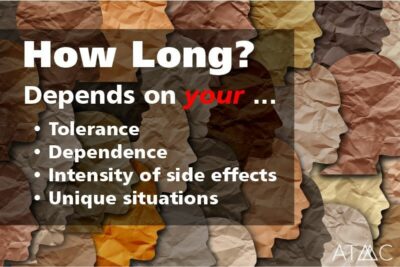
It is important to remember the uniqueness of each individual. A wide range of factors should be considered when planning any cessation program, including environmental, historical, genetic, dietary, and other health factors. No two people are exactly the same, and it is their unique qualities that best determine the timeline for clonazepam withdrawal.
Treatment for Clonazepam (Klonopin) Abuse and Dependence
Prescription drug dependence should be treated as a medical problem, not a primarily moral problem, but patients sometimes end up on the receiving end of criticism for their predicament instead of medical assistance.
 Medical professionals are largely untrained in drug withdrawal. Compassionate professional help is key to recovery. At our holistic. medically staffed center, we strive to provide safe and compassionate Klonopin withdrawal, as well as alternative treatments for anxiety or other unwanted conditions where drugs may have proven ineffective, or brought on harsh adverse effects which outweighed their benefits. Comfort therapies are used extensively such as therapeutic massage and other spa treatments, acupuncture, healing mineral baths, and much more. Exercise provides another helpful tool as in Qi Gong, and Equine therapy.
A nutrient-rich diet free of chemicals, as well as supplementation, are provided to boost recovery, based on orthomolecular health principles. Lab testing can isolate specific deficiencies that can then be remedied. Giving the body the raw materials it needs for neurotransmitter rehabilitation is a key principle in treatment at Alternative to Meds Center. Counseling is provided in many genres, providing individualized psychological support to each client. Peer group programs provide an atmosphere of exceptional camaraderie at the center as well.
At Alternative to Meds Center, we test for and remove toxins that have accumulated in the body over one’s lifetime. Neurotoxicity causes many symptoms and our industrialized environment continually assaults our health through exposure to poisons. Exposing the body to hundreds of thousands of toxic chemicals takes a toll on our hormones, neurochemistry, reproductive organs, and other intricate physiology vital to our physical survival, and our mental health.3,28
Does Removal of Neurotoxins Aid in Klonopin Withdrawal?
Eliminating neurotoxins aids in a successful recovery. One example of a common excitotoxin is organophosphates, used in pesticides. This toxic accumulation can affect acetylcholinesterase enzymes, which in turn causes overstimulation of neuronal pathways.3,28
Cleansing toxicity from the body helps clonazepam withdrawal and can help reverse neurochemical dysfunction in general. Pesticides kill pests by knocking out the pest’s nervous system. There is a possible parallel in human physiology because although we are much bigger, and not green, we do have acetylcholine receptors. Because we have a liver to break down toxins, the impact may be somewhat different in humans than in grasshoppers. However, an individual whose genetics have been compromised may have a similar liability linked to accumulated toxins. Pests react with twitching muscles and other unnatural body motions, not unlike those seen in humans with toxin-laden neurochemistry.
Effects of Food Additives on Neurochemistry
Even relatively common food additives such as MSG© and aspartame have been linked to synaptic over-firing. These chemicals and their derivatives can stimulate receptors such as the NMDA receptor, resulting in neurotoxicity in these receptors.30 In contrast, after neurotoxic accumulations get purged from the system, our clients typically report improvements in sleep, calmer mood, feeling brighter and more energetic, and other positive changes. But that is just the beginning.
Authentic wellness is sustainable wellness that does not depend on pharmaceutical drugs. Although the cumulative effects of many environmental toxins are as yet understudied, we do know that certain chemicals and toxic substances have specific detrimental effects on mental health. For one striking example, the onset of Parkinson’s disease is associated with pesticide exposure.3,29
We cannot overstate the importance of neurotoxin removal for improvements in mental health. We have seen the results speak for themselves, using natural cleansing therapy on thousands of our clients.
Why Consider Inpatient Klonopin Withdrawal at ATMC?
 Two things can motivate the desire for Klonopin withdrawal — lack of drug efficacy and the challenge of adverse drug effects. Part of the solution includes finding drug-free approaches to address the unwanted symptoms that first lead to a prescription of Klonopin. Each person’s situation is highly specific to them and the guidance of an experienced and trusted medical team can help determine the best way forward. Over the past 2 decades, Alternative to Meds Center developed a wide range of treatment strategies that not only reduce the discomfort of clonazepam withdrawal but give relief to one’s original symptoms without drugs. We aim to understand the root cause of symptoms and address that effectively. Please review our services overview page where you will find a detailed summary of many of the techniques and strategies our clinicians use to design client programs.
Klonopin or clonazepam withdrawal and all it entails might be challenging to one’s family or home life. Many families have chosen inpatient care to take the stress off the situation and provide peace of mind for all concerned. Our medical doctors and a wealth of licensed caregivers are dedicated to making Klonopin withdrawal as gentle and pleasant as possible.
Alternative to Meds Center’s holistic detox methods can help you bridge over to alternative therapies that can bring true relief of symptoms. Our aim is to help our clients attain natural sustainable mental health. Please ask us for more information on the world-class Klonopin withdrawal programs at Alternative to Meds Center, located at the foot of the majestic Red Rock mountains in beautiful Sedona Arizona.
for Klonopin (clonazepam) Withdrawal Help
1. FDA Label Klonopin tablets (clonazepam) [approved 6/4/1975, revised Oct 2017] [cited 2023 April 28]
2. O’brien CP. Benzodiazepine use, abuse, and dependence. J Clin Psychiatry. 2005;66 Suppl 2:28-33. PMID: 15762817.[cited 2023 April 28]
3. Mattson MP, “Excitotoxins- an overview.” Science Direct [published online, N.D.] [cited 2023 April 28]
4. Almgren M, Källén B, Lavebratt C. Population-based study of antiepileptic drug exposure in utero–influence on head circumference in newborns. Seizure. 2009 Dec;18(10):672-5. doi: 10.1016/j.seizure.2009.09.002. Epub 2009 Oct 13. PMID: 19828334. [cited 2023 April 28]
5. NIDA/NIH authors, “Benzodiazepines and Opioids” [published online 2018 Mar 15] [cited 2023 April 28]
6. “Drug Scheduling” U.S. Drug Enforcement Administration. [published online, N.D.] [cited 2023 April 28]
7. Pétursson H. The benzodiazepine withdrawal syndrome. Addiction. 1994 Nov;89(11):1455-9. doi: 10.1111/j.1360-0443.1994.tb03743.x. PMID: 7841856.[cited 2023 April 28]
8. Brett J, Murnion B. Management of benzodiazepine misuse and dependence. Aust Prescr. 2015;38(5):152-155. doi:10.18773/austprescr.2015.055 [cited 2023 April 28]
9. Lader M. Benzodiazepine harm: how can it be reduced? Br J Clin Pharmacol. 2014 Feb;77(2):295-301. doi: 10.1111/j.1365-2125.2012.04418.x. PMID: 22882333; PMCID: PMC4014015. [cited 2023 April 28]
10. Chouinard G. Issues in the clinical use of benzodiazepines: potency, withdrawal, and rebound. J Clin Psychiatry. 2004;65 Suppl 5:7-12. PMID: 15078112. [cited 2023 April 28]
11. Nelson J, Chouinard G. Guidelines for the clinical use of benzodiazepines: pharmacokinetics, dependency, rebound and withdrawal. Canadian Society for Clinical Pharmacology. Can J Clin Pharmacol. 1999 Summer;6(2):69-83. PMID: 10519733. [cited 2023 April 28]
12. Pimlott NJ, Hux JE, Wilson LM, Kahan M, Li C, Rosser WW. Educating physicians to reduce benzodiazepine use by elderly patients: a randomized controlled trial. CMAJ. 2003 Apr 1;168(7):835-9. PMID: 12668540; PMCID: PMC151988. [cited 2023 April 28]
13. FDA Drug Information: Benzodiazepines [published online Sept 23 2020] [cited 2023 April 28]
14. FDA label Xanax (revised 20160 [cited 2023 April 28]
15. DEA Fact Sheet, “Benzodiazepines: Street Names” [online] December 2019 [cited 2023 April 28]
16. Dept. Consumer Protection, “Clonazepam” fact sheet [online] N.D.[cited 2023 April 28]
17. Ashton H. Guidelines for the rational use of benzodiazepines. When and what to use. Drugs. 1994 Jul;48(1):25-40. doi: 10.2165/00003495-199448010-00004. PMID: 7525193. [cited 2023 April 28]
18. Lader M. Short-term versus long-term benzodiazepine therapy. Curr Med Res Opin. 1984;8 Suppl 4:120-6. doi: 10.1185/03007998409109550. PMID: 6144459. [cited 2023 April 28]
19. Ashton, H, “The Ashton Manual” [as published online] [cited 2023 April 28]
20. Laskey C, Opitz B. Tinnitus associated with benzodiazepine withdrawal syndrome: A case report and literature review. Ment Health Clin. 2020;10(3):100-103. Published 2020 May 7. doi:10.9740/mhc.2020.05.100 [cited 2023 April 28]
21. Bounds CG, Nelson VL. Benzodiazepines. [Updated 2020 Nov 22]. In: StatPearls [Internet]. Treasure Island (FL): StatPearls Publishing; 2021 Jan. Available from: https://www.ncbi.nlm.nih.gov/books/NBK470159/ [cited 2023 April 28]
22. Tapiainen V, Taipale H, Tanskanen A, Tiihonen J, Hartikainen S, Tolppanen AM. The risk of Alzheimer’s disease associated with benzodiazepines and related drugs: a nested case-control study. Acta Psychiatr Scand. 2018 Aug;138(2):91-100. doi: 10.1111/acps.12909. Epub 2018 May 31. PMID: 29851063. [cited 2023 April 28]
23. Rajamaki B, Hartikainen S, Tolppanen AM. Psychotropic Drug-Associated Pneumonia in Older Adults. Drugs Aging. 2020 Apr;37(4):241-261. doi: 10.1007/s40266-020-00754-1. PMID: 32107741; PMCID: PMC7096389. [cited 2023 April 28]
24. Haefely W. Benzodiazepine interactions with GABA receptors. Neurosci Lett. 1984 Jun 29;47(3):201-6. doi: 10.1016/0304-3940(84)90514-7. PMID: 6147796. [cited 2023 April 28]
25. Petit J, Sansone RA. A case of interdose discontinuation symptoms with venlafaxine extended release. Prim Care Companion CNS Disord. 2011;13(5):PCC.11l01140. doi:10.4088/PCC.11l01140 [cited 2023 April 28]
26. NIH, “Benzodiazepines and Opioids” [information letter published online] [cited 2023 April 28]
27. Welch TR, Rumack BH, Hammond K. Clonazepam overdose resulting in cyclic coma. Clin Toxicol. 1977;10(4):433-6. doi: 10.3109/15563657709046280. PMID: 862377. [cited 2023 April 28]
28. Brown JS Jr. Psychiatric issues in toxic exposures. Psychiatr Clin North Am. 2007 Dec;30(4):837-54. doi: 10.1016/j.psc.2007.07.004. PMID: 17938048. [cited 2023 April 28]
29. Costa LG, Giordano G, Guizzetti M, Vitalone A. Neurotoxicity of pesticides: a brief review. Front Biosci. 2008 Jan 1;13:1240-9. doi: 10.2741/2758. PMID: 17981626.[cited 2023 April 28]
30. Choudhary AK, Lee YY. Neurophysiological symptoms and aspartame: What is the connection? Nutr Neurosci. 2018 Jun;21(5):306-316. doi: 10.1080/1028415X.2017.1288340. Epub 2017 Feb 15. PMID: 28198207. [cited 2023 April 28]
31. Basit H, Kahwaji CI. Clonazepam. [Updated 2021 Dec 29]. In: StatPearls [Internet]. Treasure Island (FL): StatPearls Publishing; 2022 Jan-. Available from: https://www.ncbi.nlm.nih.gov/books/NBK556010/ [cited 2023 April 28]
32. Alicja Lerner, Michael Klein, Dependence, withdrawal and rebound of CNS drugs: an update and regulatory considerations for new drugs development, Brain Communications, Volume 1, Issue 1, 2019, fcz025 [cited 2023 April 28]
33. Dokkedal-Silva V, Berro LF, Galduróz JCF, Tufik S, Andersen ML. Clonazepam: Indications, Side Effects, and Potential for Nonmedical Use. Harv Rev Psychiatry. 2019 Sep/Oct;27(5):279-289. doi: 10.1097/HRP.0000000000000227. PMID: 31385811. [cited 2023 April 28]
34. Balaram K, Marwaha R. Agoraphobia. 2022 Jun 7. In: StatPearls [Internet]. Treasure Island (FL): StatPearls Publishing; 2022 Jan–. PMID: 32119274.[cited 2023 April 28]
35. Citkowska-Kisielewska A, Rutkowski K, Sobański JA, Dembińska E, Mielimąka M. Anxiety symptoms in obsessive-compulsive disorder and generalized anxiety disorder. Psychiatr Pol. 2019 Aug 31;53(4):845-864. English, Polish. doi: 10.12740/PP/105378. Epub 2019 Aug 31. PMID: 31760413.[cited 2023 April 28]
36. Roche Product Monograph Rivotril (clonazepam) [approval revised July 5, 2021] [cited 2023 April 28]
37. Kharadi D, Patel K, Rana D, Patel V. Off-label drug use in Psychiatry Outpatient Department: A prospective study at a Tertiary Care Teaching Hospital. J Basic Clin Pharm. 2015 Mar;6(2):45-9. doi: 10.4103/0976-0105.152090. PMID: 25767363; PMCID: PMC4356999. [cited 2023 April 28]
38. Shakeel S, Nesar S, Rehman H, Jamil K, Mallick IA, Mustafa MS, Anwar M, Jamshed S. Patterns and Predictors of Off-Label Drug Prescribing in Psychiatric Practice: A Qualitative Study. Pharmacy (Basel). 2021 Dec 20;9(4):203. doi: 10.3390/pharmacy9040203. PMID: 34941635; PMCID: PMC8703660. [cited 2023 April 28]
39. Revet A, Yrondi A, Montastruc F. Règles de bon usage des benzodiazépines [Good practices in prescribing benzodiazepines]. Presse Med. 2018 Oct;47(10):872-877. French. doi: 10.1016/j.lpm.2018.10.008. Epub 2018 Oct 29. PMID: 30385184. [cited 2023 April 28]
Originally Published Sep 13, 2018 by Diane Ridaeus

Dr. Michael Loes, M.D.
Dr. Michael Loes is board-certified in Internal Medicine, Pain Management and Addiction Medicine. He holds a dual license in Homeopathic and Integrative Medicine. He obtained his medical doctorate at the University of Minnesota, Minneapolis, MN, 1978. Dr. Loes performed an externship at the National Institute of Health for Psychopharmacology. Additionally, he is a well-published author including Arthritis: The Doctor’s Cure, The Aspirin Alternative, The Healing Response, and Spirit Driven Health: The Psalmist’s Guide for Recovery. He has been awarded the Minnesota Medical Foundation’s “Excellence in Research” Award.
Social Profile: LinkedIn

Diane is an avid supporter and researcher of natural mental health strategies. Diane received her medical writing and science communication certification through Stanford University and has published over 3 million words on the topics of holistic health, addiction, recovery, and alternative medicine. She has proudly worked with the Alternative to Meds Center since its inception and is grateful for the opportunity to help the founding members develop this world-class center that has helped so many thousands regain natural mental health.