Call Mon-Sun:
1 (800) 301-3753

Antidepressants (including SSRIs) Emotional Health Risks

Last Updated on November 28, 2025 by Diane Ridaeus

2. Alternative to Meds Editorial Team
Medically Reviewed by Dr Samuel Lee MD

Astoundingly, as many as 1 in 8 in the US are taking medications such as antidepressants for relief from emotional distress — but many are finding that emotional health risks are actually what they are getting, finding themselves at an emotional dead-end.

Is there a healthier way to find relief from emotional dysfunction? Please read on for a more complete understanding of the emotional risks of antidepressant therapy. ATMC’s approach follows a different path, helping our clients regain natural mental health in all its glory, without medication.


Healthy emotions are the key to a wonderful life, naturally!
antidepressants & emotional health risks
We at ATMC want you to look over the high rates of success of clients who have come to the center for help over the past nearly two decades. ATMC utilizes the best of environmental medicine, orthomolecular medicine, and the best from both cutting edge and ancient healing technologies, in designing programs tailored to the exact needs of our clients. ATMC aims to surpass the “do no harm” principle of medicine, and actually provide natural healing therapeutic treatments. You will not find a more passionate group than ATMC staff for their dedication to helping you and your loved ones to attain your unique personal goals. We provide a path to travel that will get you there.
15 Years Experience by Professionals Who Understand Your Journey.
Up to 87 ½% Long-Term Success Rate.
Click to Call7 Days a Week

Join Our Information ARMY AND STAY INFORMED
  • This field is for validation purposes and should be left unchanged.
  • By completing this form, you will be added to our mailing list. You may opt out at any time.
  • This field is hidden when viewing the form

Emotional Health Risks of Antidepressant Medications

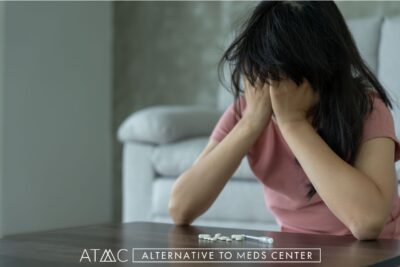
emotional health risks to taking antidepressantsAntidepressants are prescribed in the main to give a person relief from unwanted emotions such as depression, anxiety, specific disorders like OCD, PMDD, panic disorders, as well as a very long list of “off label” solutions to other problems. But despite the optimism found in drug advertising, and even in a brief visit to a prescriber’s office, the antidepressant medications being prescribed have a liability of actually worsening such symptoms, and even causing new emotional dysfunction that wasn’t there before starting the medication.

Even the most ardent promoter of antidepressant drugs has to consider that any positive outcomes can have a shelf-life, as the neuroplasticity of neurons adapt and develop tolerance to the medication.

Others who may experience successfully flattening of unwanted emotions can be thrown into chaos when trying to stop taking the antidepressant drug. So they may be advised by their prescriber to keep taking it, at increasingly higher doses for relief. With these and other liabilities associated with antidepressants, and the numbers of people taking them, perhaps it’s time to take a closer look at emotional health risks that are documented in the medical literature. 1-5

There is a special warning on the label for SSRIs such as Prozac to be especially alert for these changes at the beginning of treatment, or whenever dosage is increased or decreased.

Reading the Drug Labels May Not Be Enough

Many of the emotional adverse effects are not listed on the drug labels, but are documented in post-marketing clinical studies and case reports. These drug-induced symptoms have tended to dissipate and improve over time, once the antidepressant drug is properly discontinued.12-15

Sometimes it can help to let others know what you have experienced so they can become more aware of things that might be overlooked while in the decision-making process of whether they should try medication, or consider other treatments instead. Anyone taking SSRIs, TCAs, or other types of antidepressants can report adverse emotional effects or other adverse side effects on the FDA’s reporting portal. (FAERS) You may be helping others by doing so.

Adverse Emotional Health Risks of Antidepressants can include:
  • Suicidality
  • Worsening depression
  • Anxiety
  • Agitation
  • Nervousness
  • Panic attacks
  • Irritability
  • Hostility
  • Aggressiveness
  • Impulsivity
  • Hypomania
  • Mania
  • Paranoia
  • Malaise (generally feeling uncomfortable, low mood, with no specified reason)
  • Emotional lability — sudden dramatic mood changes without a clear trigger. These are characterized by rapid onset, and exaggerated in their character.
  • Emotional blunting or flattening — a decrease in response to either pleasurable or unpleasant environmental stimulus 12
  • Induced apathy syndrome 13
  • Loss of motivation, energy, curiosity 14
  • Mental dullness 15

How Effective are Antidepressants?

When comparing drug-based therapy to non-drug-based therapies, clinicians have noted the differences in success in many different genres of clinical therapy; and, antidepressant therapy does not come out shining in actual clinical statistics.4,6,7

This is why ATMC is a proponent of non-toxic, non-harmful and proven methods of regaining natural mental health for life.

Orthomolecular medicine and its nutritional guidelines for mental wellness, environmental medicine, and its ability to find root causes for toxin-related mental health symptoms, along with therapeutic massage and other comfort therapies, the power of exercise for mental wellness, and a blend of ancient healing practices provide a wide range of therapies that have a proven rate of success for our clients.

Success rates of antidepressant therapy:

  • One third of antidepressant therapeutic outcomes derives from placebo effect.
  • Another third get no relief even after trying 2 or more antidepressants and even heavier treatments such as antipsychotics or IV ketamine treatments. These patients are categorized as “treatment-resistive.”
  • Women and the elderly experience a greater burden of antidepressant side effects
  • In mild symptoms, any improvement over placebo effect is generally absent
  • Organic treatments such as saffron not only have neuroprotective and anti-inflammatory effects, but clinical trials have demonstrated it to be as efficacious as antidepressant drug treatment
  • Additionally, non-drug treatments like saffron introduce no side effects compared to either placebo or antidepressant drugs. making it both SAFE and EFFECTIVE
  • Up to 60% of MDD patients stop taking their antidepressant due to adverse drug reactions
  • Over 50% of those taking antidepressants experience adverse side effects.

Physiological Adverse Effects

In addition to emotional adverse event risks, there are a wide variety of physical side effects associated with antidepressants. The following have been gleaned from FDA-approved labeling information, and may not be a complete list. It is provided here for additional context, as many of these would also adversely affect one’s emotional health because of having to experience the consequences of these events.8-21

Physiological adverse effects from antidepressants including SSRIs can include:
  • Tremor
  • Tachycardia (elevated heart rate)
  • Heightened risk of other cardiac adverse effects such as heart attack, torsades de points, arrhythmias, death, across all age groups
  • Loss of appetite, indigestion, diarrhea, constipation
  • Bruxism (grinding the teeth)
  • Impaired judgement, motor skills, risk of accidental falls, MVAs, or other types of accidents
  • Hypothyroidism (under-active thyroid, can result in forgetfulness, weight gain, fatigue, anxiety, depression, and many other resulting symptoms)
  • Low sodium plasma events (hyponatremia): headache, memory impairment, confusion, hallucination, weakness, unsteadiness, syncope, coma, seizure, respiratory arrest, can be fatal
  • Flu-like symptoms, sweating, fatigue, nausea, dizziness, somnolence
  • Damage to eyes, blurred vision
  • Medication-induced bleeding events, i.e., in the brain, in the gut, vagina, and the gums
  • Sexual dysfunction in both males and females
  • Insomnia
  • Restlessness
  • Akathisia
  • Serotonin syndrome

Risks Associated with Coming Off Antidepressants

With such a large percentage of people experiencing both emotional adverse effects and physiological reactions, many consider coming off these drugs. However, since many harsh symptoms are also associated with changing the dose, and with the process of withdrawal, care must be taken to discontinue antidepressants in a safe and very gradual manner.

Please remember, always seek professional help for antidepressant withdrawal and never abruptly stop, except in very specific situations such as serotonin syndrome or other life-threatening events.

ATMC Offers Safe, Comfortable Antidepressant Withdrawal Services

holistic antidepressant withdrawal Sedona drug rehabFor nearly two decades ATMC has helped thousands of clients to safely withdraw from SSRIs and other types of psychotropic medications. The precise use of antidepressant alternatives that are non-toxic and non-psychotropic has provided a safe and reliable way to navigate and ease antidepressant withdrawal under medical supervision, in a comforting and friendly environment.

The use of lab testing is one of the primary pillars of our treatment programs, so that the root causes for symptoms can be isolated and treated in a logical, safe, healthy way.

You can find out much more about the the protocols and treatments used during inpatient and medically supervised antidepressant withdrawal by visiting the following pages on ATMC’s website:

1. Antidepressant Alternatives | Natural Alternatives to Antidepressants

2. Antidepressant Medication Withdrawal Support, Side-effects, Treatment

3. Antidepressant Tapering Help | Holistic Weaning & Titration Support

If you or your loved one has suffered from antidepressant emotional adverse effects or other debilitating consequences, we understand. If you are considering professional help in your healing journey, please reach out to us.

We are here to answer your most important questions about recovery after antidepressants and solutions to the emotional risks you may have suffered. Your health and healing is our priority.

Sources:


1. Goldberg JF. Perspectives on the success rate of current antidepressant pharmacotherapy. Expert Opin Pharmacother. 2022 Nov;23(16):1781-1791. doi: 10.1080/14656566.2022.2138333. Epub 2022 Oct 24. PMID: 36259350. [cited 2025 Nov 28]

2. Kennedy SH. Treating each and every depressed patient. J Psychopharmacol. 2008 Sep;22(7 Suppl):19-23. doi: 10.1177/0269881108093270. PMID: 18753279. [cited 2025 Nov 28]

3. Chauhan S, Tiwari A, Verma A, Padhan PK, Verma S, Gupta PC. Exploring the Potential of Saffron as a Therapeutic Agent in Depression Treatment: A Comparative Review. Yale J Biol Med. 2024 Sep 30;97(3):365-381. doi: 10.59249/XURF4540. PMID: 39351321; PMCID: PMC11426294. [cited 2025 Nov 28]

4. Dai L, Chen L, Wang W. Safety and Efficacy of Saffron (Crocus sativus L.) for Treating Mild to Moderate Depression: A Systematic Review and Meta-analysis. J Nerv Ment Dis. 2020 Apr;208(4):269-276. doi: 10.1097/NMD.0000000000001118. PMID: 32221179. [cited 2025 Nov 28]

5. Niarchou E, Roberts LH, Naughton BD. What is the impact of antidepressant side effects on medication adherence among adult patients diagnosed with depressive disorder: A systematic review. J Psychopharmacol. 2024 Feb;38(2):127-136. doi: 10.1177/02698811231224171. PMID: 38344912; PMCID: PMC10863360. [cited 2025 Nov 28]

6. Baculio et al, A Systematic Review on the Effectiveness of Cognitive Behavioral Therapy (CBT) Compared to Antidepressant Medications on Adults with Depressive Disorder published in the International Journal for Multidisciplinary Research Volume 7, Issue 1, January-February 2025 [cited 2025 Nov 28]

7. McIntyre RS, Alsuwaidan M, Baune BT, Berk M, Demyttenaere K, Goldberg JF, Gorwood P, Ho R, Kasper S, Kennedy SH, Ly-Uson J, Mansur RB, McAllister-Williams RH, Murrough JW, Nemeroff CB, Nierenberg AA, Rosenblat JD, Sanacora G, Schatzberg AF, Shelton R, Stahl SM, Trivedi MH, Vieta E, Vinberg M, Williams N, Young AH, Maj M. Treatment-resistant depression: definition, prevalence, detection, management, and investigational interventions. World Psychiatry. 2023 Oct;22(3):394-412. doi: 10.1002/wps.21120. PMID: 37713549; PMCID: PMC10503923. [cited 2025 Nov 28]

8. FDA drug label Lexapro/escitalopram oxalate published online, revised 1/2017 [cited 2025 Nov 28]

9. FDA drug label Wellbutrin/bupropion hydrochloride published online, revised 2017 [cited 2025 Nov 28]

10. FDA label Zoloft/sertraline hydrochloride published online, revised December 2016 [cited 2025 Nov 28]

11. FDA drug label Prozac/fluoxetine published online revised Aug 2023 [cited 2025 Nov 28]

12. Marazziti D, Mucci F, Tripodi B, Carbone MG, Muscarella A, Falaschi V, Baroni S. Emotional Blunting, Cognitive Impairment, Bone Fractures, and Bleeding as Possible Side Effects of Long-Term Use of SSRIs. Clin Neuropsychiatry. 2019 Apr;16(2):75-85. PMID: 34908941; PMCID: PMC8650205. [cited 2025 Nov 28]

13. Barnhart WJ, Makela EH, Latocha MJ. SSRI-induced apathy syndrome: a clinical review. J Psychiatr Pract. 2004 May;10(3):196-9. doi: 10.1097/00131746-200405000-00010. PMID: 15330228. [cited 2025 Nov 28]

14. Padala PR, Padala KP, Majagi AS, Garner KK, Dennis RA, Sullivan DH. Selective serotonin reuptake inhibitors-associated apathy syndrome: A cross sectional study. Medicine (Baltimore). 2020 Aug 14;99(33):e21497. doi: 10.1097/MD.0000000000021497. PMID: 32871995; PMCID: PMC7437849. [cited 2025 Nov 28]

15. Barbosa Eyler GE. ¿Apatía o embotamiento emocional por ISRS? Una revisión de la literatura [Embotional Blunting or apathy by SSRI? A sistematic review about their emotional effects]. Vertex. 2023 Oct 10;34(161, jul.-sept.):61-66. Spanish. doi: 10.53680/vertex.v34i161.486. PMID: 37819063. [cited 2025 Nov 28]

16. Yekehtaz H, Farokhnia M, Akhondzadeh S. Cardiovascular considerations in antidepressant therapy: an evidence-based review. J Tehran Heart Cent. 2013 Oct 28;8(4):169-76. PMID: 26005484; PMCID: PMC4434967. [cited 2025 Nov 28]

17. Danielsson B, Collin J, Jonasdottir Bergman G, Borg N, Salmi P, Fastbom J. Antidepressants and antipsychotics classified with torsades de pointes arrhythmia risk and mortality in older adults – a Swedish nationwide study. Br J Clin Pharmacol. 2016 Apr;81(4):773-83. doi: 10.1111/bcp.12829. Epub 2016 Jan 11. PMID: 26574175; PMCID: PMC4799929. [cited 2025 Nov 28]

18. Montvilaitė R. Antidepressant Prescription to Children/Adolescents and Its Effects on the Cardiovascular System, Comprising the Actual Questions of Periodicity of the Checkups, Cooperation among Pediatricians, Family Doctors, Cardiologists and Children-Adolescent Psychiatrists. Acta Med Litu. 2025;32(1):52-63. doi: 10.15388/Amed.2025.32.1.15. Epub 2025 Feb 18. PMID: 40641530; PMCID: PMC12239188. [cited 2025 Nov 28]

19. FDA FAERS Reporting System published online since 2004 [cited 2025 Nov 28]

20. Liao H, Rosenthal DS, Kumar SC. Abnormal Thyroid Function Laboratory Results Caused by Selective Serotonin Reuptake Inhibitor (SSRI) Antidepressant Treatment. Case Rep Psychiatry. 2023 May 11;2023:7170564. doi: 10.1155/2023/7170564. PMID: 37215167; PMCID: PMC10195165. [cited 2025 Nov 28]

21. Edinoff AN, Raveendran K, Colon MA, Thomas BH, Trettin KA, Hunt GW, Kaye AM, Cornett EM, Kaye AD. Selective Serotonin Reuptake Inhibitors and Associated Bleeding Risks: A Narrative and Clinical Review. Health Psychol Res. 2022 Nov 3;10(4):39580. doi: 10.52965/001c.39580. PMID: 36425234; PMCID: PMC9680839. [cited 2025 Nov 28]

Originally Published November 28, 2025 by Diane Ridaeus


This content has been reviewed and approved by a licensed physician.

Dr. Samuel Lee

Dr. Samuel Lee is a board-certified psychiatrist, specializing in a spiritually-based mental health discipline and integrative approaches. He graduated with an MD at Loma Linda University School of Medicine and did a residency in psychiatry at Cedars-Sinai Medical Center and University of Washington School of Medicine in Seattle. He has also been an inpatient adult psychiatrist at Kaweah Delta Mental Health Hospital and the primary attending geriatric psychiatrist at the Auerbach Inpatient Psychiatric Jewish Home Hospital. In addition, he served as the general adult outpatient psychiatrist at Kaiser Permanente.  He is board-certified in psychiatry and neurology and has a B.A. Magna Cum Laude in Religion from Pacific Union College. His specialty is in natural healing techniques that promote the body’s innate ability to heal itself.

Social Profile: LinkedIn

View Bio

Medical Disclaimer:
Nothing on this Website is intended to be taken as medical advice. The information provided on the website is intended to encourage, not replace, direct patient-health professional relationships. Always consult with your doctor before altering your medications. Adding nutritional supplements may alter the effect of medication. Any medication changes should be done only after proper evaluation and under medical supervision.

We Accept Most PPO Insurance Plans for Partial Coverage of Fees

Call Now to Verify BlueCross BlueShield Cigna Aetna

Our Success Stories

Medication Withdrawal Success Stories

Can you imagine being free from medications, addictive drugs, and alcohol? This is our goal and we are proving it is possible every day!

Read All StoriesView All Videos