Alternative to Meds Editorial Team
Medically Reviewed by Dr John Motl MD
Table of Contents:
- Video: Antidepressants FAQs
- Amitriptyline Withdrawal Symptoms — What to Expect
- Amitriptyline Side Effects
- Sarah’s Success Story
- Using Holistic Alternative Therapies Can Help During Amitriptyline Withdrawal
- Amitriptyline Overdose Risks, Drug Interaction Risks, Notes on Pregnancy
- Amitriptyline Withdrawal at Alternative to Meds Center
Medical practice should not have evolved into a numbers game — fast tracking the most patients in the shortest amount of time, with a focus on prescribing drugs. Unfortunately, that has left many patients stuck on an antidepressant that doesn’t work, or worsens your health, and no guidelines on tapering off a drug like amitriptyline safely.
Amitriptyline Withdrawal Symptoms — What to Expect
Amitriptyline withdrawal and the drug’s profile of side effects were not fully understood when it hit the market in the early 1960s. The drug classification as a “TCA” or tricyclic antidepressant, simply comes from the chemists that created it, referring to its 3-ringed chemical structure. When amitriptyline was introduced, the word “antidepressant” had not come into popular usage yet.
 Amitriptyline (marketed under the brand name Elavil) was one of the drugs born of the pharma-frenzy to find new and better schizophrenia drugs. When the drug didn’t work for schizophrenia, it was later repurposed as an “antidepressant,” or mood elevator (hence the name Elavil). Amitriptyline’s mood elevating effects were deemed a good fit for the “serotonin deficiency” theory of “depression.” Like all antidepressants, the drug accelerates the spending of available neurotransmitters, which temporarily does boost mood until these natural neurotransmitters become used up, and now there is the liability of an actual deficiency.
Amitriptyline blocks or pools a number of certain neurotransmitters or their receptors, which are not completely understood. Research suggests amitriptyline blocks serotonin, norepinephrine, and strongly binds to adrenergic, histamine and muscarinic receptors 1 Since data of this nature is not easy to find, it could well be that other hormones are affected as well. However, what we generally do know is the “reuptake inhibition” sparks a signal to the body to stop creating more of these hormones, as a cautionary, regulatory function. When amitriptyline is withdrawn, the resulting reactions can be expected to parallel the disruption and the created deficit of these natural chemicals. It becomes clear to understand that the more abrupt the withdrawal, the more extreme the reaction may be. The body hasn’t been given a chance to readjust.1-5
Therefore, the safest strategy in amitriptyline withdrawal is to taper off gradually — VERY gradually. More information will follow regarding natural withdrawal relief and holistic amitriptyline alternatives to further ease the withdrawal process.
Amitriptyline withdrawal symptoms can include:
- Rebound symptoms, more intense than before starting medication. (i.e., worsened insomnia, worsened depression, worsened anxiety, worsened suicidality, etc.)
- FINISH — a list of flu-like symptoms that include insomnia, nausea, imbalance (dizziness, vertigo), sensory disturbances, like brain zaps, and hyperarousal, referring to anxiety, agitation and irritability.
Other amitriptyline withdrawal symptoms can include
- Hallucinations
- Tachycardia (elevated heart rate at rest)
- Fatigue, weakness
- Headache
- Shortness of breath
- Sweating, flushing, chills
- Blurred vision, altered vision
- Tinnitus
- Altered taste
- Anorexia, loss of appetite
- Itching
- Muscle tension, aches, tremors
- Diarrhea, abdominal pain
- Sexual dysfunction, genital hypersensitivity
- Vivid dreams, nightmares
- Confusion, disorientation, reduced concentration
- Amnesia
- Panic
- Crying spells
- Rage
- Impulsivity
Everyone has a unique profile, and your symptoms may not appear above. The good news is that with the use of non-drug-based alternative treatments, these symptoms can be significantly reduced and even eliminated.
Withdrawal symptoms are often mistaken for relapse.2,11 If this misdiagnosis is made, other errors usually follow such as introducing multiple drugs, and incorrectly treating withdrawal as if it were a whole new “mental illness” emerging. This is especially common where the withdrawal was too abrupt and the reactions were too potent, too overwhelming.
Since amitriptyline has a relative short half-life (10-28 hours), and the fact that it is prescribed for not only depression but an absolute encyclopedia of other ills, your rebound symptoms may include a return of and intensification of your original symptoms.
At ATMC, your program is medically supervised by medical pros who understand the intricate and precision methods of providing natural withdrawal relief, and 24/7 care is there to keep you comfortable and nourished on many levels throughout your healing journey
Amitriptyline Side Effects
Over time, the side effects of amitriptyline motivated drug makers to search for safer drugs to “treat” depression. Unfortunately, the SSRIs that have since saturated the market, have also been found to have very similar side effects and liabilities. Another shared feature among all antidepressants is they stop working over time. This is called tolerance, which often leads to increasing the dosage, the frequency, or adding more drugs to the daily regimen.7
Amitriptyline (like many psychotropic drugs) can lower the seizure threshold, especially at high dosage or in overdose.10
Amitriptyline side effects, each category lists adverse effects that are very severe and some less severe 1,2,6,7 (please note, this is not a complete list)
 Black box warning: for increased suicidality and clinical worsening of depression 6,7
- Birth Defects
- Cardiac events: heart attacks, stroke, hypertension, tachycardia, palpitations
- CNS and Neuromuscular: coma, seizures, hallucinations, delusions, mania, hypomania, confusion, disorientation, loss of muscle coordination or control, tremors, neuropathy (nerve pain), numbness, tingling, involuntary movement disorders, excitement, anxiety, insomnia, restlessness, drowsiness, nightmares, weakness, headache, dizziness, tinnitus, and others
- Anticholinergic: blocked (paralyzed) intestines, urinary retention, constipation, blurred or other vision disturbances and changes in the eyes, dry mouth
- Hematologic: decreased red blood cells and loss of bone marrow function, decreased white blood cells (leukopenia), decreased platelet count resulting in unusual bleeding, bursting blood vessels (purpura), abnormal increase in certain white blood cells which are associated with inflammation, allergies, infection, asthma, rashes, trouble breathing, swelling, and certain cancers
- Gastrointestinal: liver damage, hepatitis, nausea, vomiting, anorexia, peculiar taste in the mouth, diarrhea, black tongue
- Endocrine: enlarged breasts and testicles in males, secretion of breast milk and enlarged breasts in females, increased or decreased libido, impotence, blood sugar dysregulation
- Other: weight gain or weight loss, increased urinary frequency, excessive perspiring, hair loss (alopecia), swelling in the feet, ankles, or other body parts.
Success Story: Overcoming Amitriptyline Dependence
Sarah, a 42-year-old with chronic migraines, struggled with Amitriptyline withdrawal’s fatigue and mood swings. At Alternative to Meds, a customized plan combining slow tapering, IV magnesium, art therapy and other treatment choices helped her regain energy and emotional stability within 12 weeks.
Everyone will have their own time line, based on their goals, and the many factors that are unique to the person’s profile.
Using Holistic Alternative Therapies Can Help During Amitriptyline Withdrawal
For a comprehensive description of non-pharmacologic remedies and strategies for amitriptyline withdrawal, please take time to review the vast range of strategies used at ATMC including neurotoxin removal 12 that provide relief of amitriptyline withdrawal symptoms. Alternative to Meds Center offers science-based programs to ease withdrawal and foster long-term wellness.
A few examples of evidence-based holistic services at ATMC include:
 Lab testing, to inform the design and monitor the progress of an individual’s program
- Safely tapering off amitriptyline under medical oversight
- Mindfulness, meditation, yoga
- Physical exercise, Qigong
- Orthomolecular nutrition plans, IV treatments
- Supplementation, personally tailored
- Neurotoxin removal
- Neurotransmitter rehabilitation
- Equine therapy
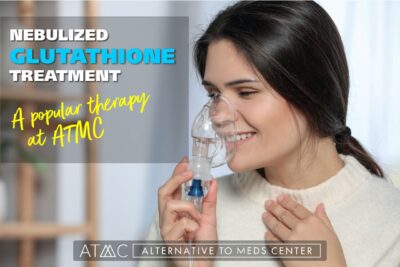
- Nebulized glutathione
- Sound Healing
- Cold Plunge Therapy
- Acupuncture
- Colon Hydrotherapy
- Sauna cleanse
- Peer Support programs
Amitriptyline Overdose Risks, Drug Interaction Risks, Notes on Pregnancy
Amitriptyline carries a high risk for death if overdose should occur. Many drugs share this liability, but amitriptyline is known to be potentially lethal and can raise risk of seizures in overdose. This is partly because the drugs effects occur so fast, and the number of mechanisms that too much of the drug in the system can disable.
There are also many risks involved with taking other medications, including alcohol, at the same time as taking amitriptyline. The types and names of drugs that should be avoided make a very, very long list, and can be found on the package insert or FDA drug label, or you can ask your prescriber if you are taking multiple drugs simultaneously.
In pregnancy, amitriptyline passes the placenta. And, though no human studies have been done, animal studies showed warning signs in newborns. Breast-feeding should be avoided if one is taking amitriptyline, and a discussion with a trusted caregiver is recommended regarding taking this drug if planning a pregnancy, or while pregnant.6-10
Amitriptyline Withdrawal at Alternative to Meds Center
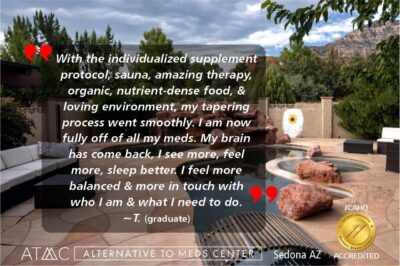 There is no other program on earth that delivers the excellent, comprehensive level of care that Alternative to Meds Center does.
We have found that the vast majority of our clients have a significant neurotoxic burden that can be safely eliminated for relief. Nutrition is key for energy, healing, and restoring all aspects of health. That is why we pay close attention to consuming clean foods, ample fresh fruits and vegetables, good quality protein, all foods organic and non-processed wherever possible, and avoiding sugars, refined carbs, chemical additives, flavor enhancers, and other endocrine disruptors in foods. The body must be supplied with the proper raw materials for real healing.
You are invited to call us and get more detailed information on amitriptyline withdrawal, and questions you may have about coming to ATMC for help.
Additional recommended reading:
Antidepressant Tapering Help | Holistic Weaning & Titration Support
Neurotransmitter Rehab | Holistic Therapies to Improve Brain Function
Treating Depression Without Antidepressants | Depression Drugs
for Help with Holistic Amitriptyline Withdrawal
Sources:
1. Thour A, Marwaha R. Amitriptyline. [Updated 2023 Jul 18]. In: StatPearls [Internet]. Treasure Island (FL): StatPearls Publishing; 2025 Jan-. Available from: https://www.ncbi.nlm.nih.gov/books/NBK537225/ [cited 2026 June 1]
2. Henssler J, Heinz A, Brandt L, Bschor T. Antidepressant Withdrawal and Rebound Phenomena. Dtsch Arztebl Int. 2019 May 17;116(20):355-361. doi: 10.3238/arztebl.2019.0355. PMID: 31288917; PMCID: PMC6637660. [cited 2026 June 1]
3. Fava GA, Gatti A, Belaise C, Guidi J, Offidani E. Withdrawal Symptoms after Selective Serotonin Reuptake Inhibitor Discontinuation: A Systematic Review. Psychother Psychosom. 2015;84(2):72-81. doi: 10.1159/000370338. Epub 2015 Feb 21. PMID: 25721705. [cited 2026 June 1]
4. Chouinard, G., & Chouinard, V. A. (2015). New classification of selective serotonin reuptake inhibitor withdrawal. Psychotherapy and Psychosomatics, 84(2), 63-71. [cited 2026 June 1]
5. Brueckle MS, Thomas ET, Seide SE, et al. Amitriptyline’s anticholinergic adverse drug reactions-A systematic multiple-indication review and meta-analysis. Plos one. 2023 ;18(4):e0284168. DOI: 10.1371/journal.pone.0284168. PMID: 37018325; PMCID: PMC10075391. [cited 2026 June 1]
6. FDA Drug Label Amitriptyline Hydrochloride published online 2014[cited 2026 June 1]
7. FDA Drug Label (may not be the most recent) Amitriptyline hydrochloride (N.D.)[cited 2026 June 1]
8. Güloglu C, Orak M, Ustündag M, Altunci YA. Analysis of amitriptyline overdose in emergency medicine. Emerg Med J. 2011 Apr;28(4):296-9. doi: 10.1136/emj.2009.076596. Epub 2010 Oct 5. PMID: 20923818. [cited 2026 June 1]
9. Umaharan T, Sivayokan S, Sivansuthan S. Amitriptyline Dependence and Its Associations: A Case Report and Literature Review. Case Rep Psychiatry. 2021 Jan 29;2021:6647952. doi: 10.1155/2021/6647952. PMID: 33564485; PMCID: PMC7864760. [cited 2026 June 1]
10. Pisani F, Oteri G, Costa C, Di Raimondo G, Di Perri R. Effects of psychotropic drugs on seizure threshold. Drug Saf. 2002;25(2):91-110. doi: 10.2165/00002018-200225020-00004. PMID: 11888352. [cited 2026 June 1]
11. Sørensen A, Jørgensen KJ, Munkholm K. Description of antidepressant withdrawal symptoms in clinical practice guidelines on depression: A systematic review. J Affect Disord. 2022 Nov 1;316:177-186. doi: 10.1016/j.jad.2022.08.011. Epub 2022 Aug 12. PMID: 35964766. [cited 2026 June 1]
12. Genuis SJ. Toxic causes of mental illness are overlooked. Neurotoxicology. 2008 Nov;29(6):1147-9. doi: 10.1016/j.neuro.2008.06.005. Epub 2008 Jun 24. PMID: 18621076. [cited 2026 June 1]
Originally Published April 11, 2025 by Diane Ridaeus

Dr. John Motl, M.D.
Dr. Motl is currently certified by the American Board of Psychiatry and Neurology in Psychiatry, and Board eligible in Neurology and licensed in the state of Arizona. He holds a Bachelor of Science degree with a major in biology and minors in chemistry and philosophy. He graduated from Creighton University School of Medicine with a Doctor of Medicine. Dr. Motl has studied Medical Acupuncture at the Colorado School of Traditional Chinese Medicine and at U.C.L.A.
Social Profile: LinkedIn

Diane is an avid supporter and researcher of natural mental health strategies. Diane received her medical writing and science communication certification through Stanford University and has published over 3 million words on the topics of holistic health, addiction, recovery, and alternative medicine. She has proudly worked with the Alternative to Meds Center since its inception and is grateful for the opportunity to help the founding members develop this world-class center that has helped so many thousands regain natural mental health.