Last Updated on September 16, 2026 by
Alternative to Meds Editorial Team
Medically Reviewed by ATMC Clinical Review Team
Table of Contents:
- Video: Lexapro Withdrawal
- What is Lexapro Addiction or Dependence?
- Lexapro for Depression … Does it Cure Depression?
- Lexapro Prescriptions — Concerning Trends?
- Lexapro Adverse Effects of Addiction and Dependence
- Video: SSRIs
- How to Resolve Lexapro Addiction
- What are the Best Ways to Reduce Harsh Lexapro Withdrawals?
- Treatment of Lexapro Addiction and Dependence at ATMC
What is Lexapro Addiction or Dependence?
Lexapro© is an antidepressant most commonly used to treat major depression (MDD) for persons aged 12 and older, and generalized anxiety disorder (GAD) only in adults. Dependence can form quickly, as well as withdrawal reactions when the drug is discontinued. While there have been rare reports of recreational abuse of Lexapro, in the main, one does not use Lexapro with the intention of becoming addicted.16 However, some people become critically aware of the dependence that has developed within a few months of treatment if the drug is stopped, or a dose has been delayed.
Have you ever forgotten to take a dose, taken it late, or when you ran out of your prescription early or reduced the dosage, you felt sick or dizzy? That is likely a mild set of Lexapro withdrawal symptoms. Most people don’t think about addiction to Lexapro as they would heroin or cocaine addiction. But as far as the human biology, the mechanics are not all that different, and once a person has experienced Lexapro withdrawal symptoms; what you call it is not as important as recognizing that the body has adapted to the drug, and is reacting to its absence.14,17 Once a person has been on this medication for an extended amount of time; the body needs it to function, due to the mechanics of neuro-adaptation.18,19 Since it is prescribed by a doctor and if it makes the person feel better; they continue to take it while a gradual dependency is building.
Physical and Mental Signs of Lexapro Addiction/Dependence
Many people report first noticing their physical and/or mental dependency upon missing their morning dosage or picking up their prescription a day or two late. Just like any other addiction, they have to have it. If they run out, they will not feel normal or happy, they will need it and they will want it. Some individuals have reported feeling a Lexapro high, though this is rare. It is more common that after a period of taking Lexapro, increasing fear of discontinuing the use of this drug occurs because of the withdrawal reactions that can occur. Also, some may start increasing their daily dosage after developing a tolerance. In surprisingly short order, one may have developed a need for Lexapro addiction help.
What can further compound the situation is the emergence of paradoxical (opposite) effects of antidepressants, especially notable after long-term use. Long-term use of antidepressants can worsen depression or other symptoms, creating a perfect storm for unresolved mental health issues.13
Lexapro for Depression … Does it Cure Depression?
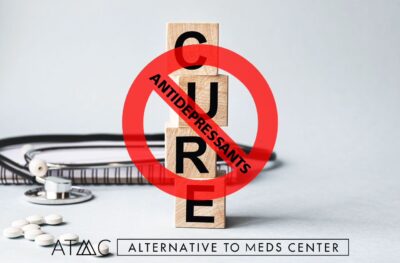 For people with depression, an antidepressant may provide great hope, and even be viewed as a miracle drug, except, unfortunately, it is not. The old adage remains true: if it seems too good to be true, it probably is. An antidepressant may dampen unwanted feelings for a short time, but it is not actually curing anything. It may indeed be causing further damage. People who are depressed might be well-advised to try taking gradual steps towards dealing with some of the underlying issues. Get help if needed to overcome the root causes, step by step. Depression is associated with a wide range of possible environmental, psycho-social, lifestyle, genetic, and dietary factors. These cannot possibly be assessed in a 15-minute visit to the doctor, or by popping a pill.1
Lexapro is marketed to consumers as an easy way out of troubled waters. Ironically, it may allow you to not have to squarely deal with the contributors to a depressed or sad state, or deal with other unwanted emotions. It may numb your pain and help you to cope and there are times when that is needed. But this cannot be sustained as a healthy way of life. People with depression are even more vulnerable to becoming dependent on taking a pill that takes their depression away, and again, just like any other drug, potentially creates a vicious cycle of addiction and dependence.
Lexapro Prescriptions — Concerning Trends?
Equally concerning is the very young age at which antidepressants such as Lexapro are prescribed. Can a 12-year-old articulate specifics about their emotional condition and express with clarity the answers to a pre-prescription interview? Are children or even adults schooled in the role of diet and nutrition, exercise, sunshine, exposure to toxins in their school, home, or work settings, allergies, and so many other factors that are known to impact mental well-being? 8-11
Most people on Lexapro were given the medication before any efforts were put forth to investigate any potential causes of the person’s depression, anxiety, or other symptoms. We can help.
[colorsection ” “]
Adverse Effects of Lexapro Addiction and Dependence
Chronic SSRI use has also been associated with reduced sensitivity in cognitive and learning function and in similar ways, these effects may reflect the blunting effect Lexapro may have on one’s emotions.20
Studies show that treating depression with medication typically has a higher relapse rate than treatment based on drug-free methods like cognitive therapies.12
Signs of Lexapro addiction or dependence include:
- Withdrawal symptoms appear when a dose is delayed or missed.
- Rebound symptoms, often intensified, occur when the drug is stopped.
- Paradoxical effects have occurred, such as worsened depression, elevated anxiety, etc.
- Needing a higher or more frequent dose for satisfactory symptom relief.
- Lexapro has stopped working, and your prescriber is suggesting switching to a different drug.
- The prescribing physician never did testing, diet modification, or other investigative work with you before prescribing.
How to Resolve Lexapro Addiction and Dependence
The important part is being able to recognize that this is a real addiction, just like an alcohol or opiate addiction; you need the drug to feel good. If you don’t have it you won’t feel good so you don’t want to stop taking it. Talking to a doctor about antidepressant addiction is a good place to begin to understand and recognize your dependency on this medication. Choose a physician who is familiar with prescription drug addiction and dependency, and familiar with alternatives for depression that don’t lay in a potential addiction or dependency.
What are the Best Ways to Reduce Harsh Lexapro Withdrawals?
Getting off Lexapro too quickly, or without other supports in place can be extremely difficult — however, it can be surprisingly easy provided one can find effective Lexapro withdrawal treatment. If you have recognized that you are dependent on this drug, then you have conquered the hardest step and the choice is yours, to take the next step towards ending Lexapro addiction and dependence.
For many, a person was put on this medication during an emotionally stressful or traumatic time in their life. Then years later they are suffering from addiction and withdrawal when trying to get off of the drug. And, like a raw wound, the emotional stress remains unresolved. These and other issues should be resolved as part of a thorough and authentic recovery program. To omit these steps could be considered almost inhumane, and would likely set a person up for relapse.
Antidepressants have been successfully marketed as a way to “boost serotonin” levels, though this theory has lost significant credibility over the last 2 decades.2-4 Much has been written about the placebo effect of antidepressant medication. Ireland’s drug regulators have stated, “There is no scientific investigation to measure what are normal serotonin levels in the human brain receptors. As such, claiming that a particular medicinal product works by bringing serotonin levels back to normal is not accurate.” 5
And, even though a person may not have a serotonin deficit initially, consumption of the drug certainly can create a real serotonin deficiency, as well as a number of other undesirable changes within the CNS (central nervous system) and the hormones and neurotransmitters that operate it.
Treatment of Lexapro Addiction and Dependence at ATMC
The Alternative to Meds Center programs use targeted nutrient therapies designed for restoring the neurotransmitters involved in overall health and to improve mental health naturally, without drugs.
Orthomolecular principles are also extremely beneficial when combating the symptoms of withdrawal. Lab testing and assessing biological causes of symptoms can accurately inform a medication-free treatment success that is long-lasting.
Good News to Consider
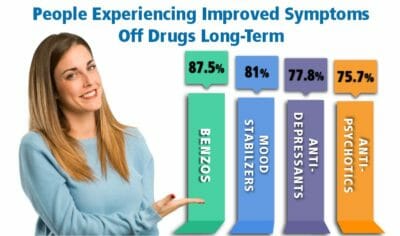
 Cognitive therapies have shown more enduring positive results compared to both medication-based treatment and placebo. Counseling formats such as cognitive-behavioral counseling and other genres of cognitive and “talk therapy” have been shown highly effective in treating depression and anxiety, as well as or better than medication, and with more long-lasting results and less frequent relapses.12
At our addiction treatment facility, we have a robust counseling program. We also aim to discover any medical causes of why a person feels depressed and our program additionally uses lab testing, natural substances that stabilize neurochemistry, removal of accumulated neurotoxins, exacting withdrawal taper techniques, therapeutic massage, personal exercise training, yoga, acupuncture, IV treatments, nebulized glutathione, art therapy, equine therapy, correction of diet, and many other therapies that can be blended together to combat depression and help you to re-design your life — the life you have always wanted. You can have that life. You are encouraged to call us and talk, so you can get a fuller understanding of the amazing therapies used in Lexapro addiction and dependence recovery available at Alternative to Meds Center.
for Lexapro Addiction Help
1. Chand SP, Arif H. Depression. [Updated 2022 May 8]. In: StatPearls [Internet]. Treasure Island (FL): StatPearls Publishing; 2022 Jan-. Available from: https://www.ncbi.nlm.nih.gov/books/NBK430847/ [cited 29025 Oct 29]
2. Kirsch I. Antidepressants and the Placebo Effect. Z Psychol. 2014;222(3):128-134. doi: 10.1027/2151-2604/a000176. PMID: 25279271; PMCID: PMC4172306. [cited 29025 Oct 29]
3. Lacasse JR, Leo J. Serotonin and depression: a disconnect between the advertisements and the scientific literature. PLoS Med. 2005;2(12):e392. doi:10.1371/journal.pmed.0020392 [cited 29025 Oct 29]
4. Meek C, SSRI Ads Questioned CMAJ Mar 2006, 174 (6) 754-754-a; DOI: 10.1403/cmaj.051634 [cited 29025 Oct 29]
5. Aikin KJ, Boudewyns V, Betts KR, Giombi KC, Paquin RS, Brewington M, Malik R. Implied Claims in Drug Advertising: A Review of Recent Literature and Regulatory Actions. Health Commun. 2024 Apr;39(4):652-665. doi: 10.1080/10410236.2023.2179717. Epub 2023 Feb 24. PMID: 36825849. [cited 2025 Oct 29]
6. FDA label Lexapro (escitalopram oxalate) oral and tablets Approval 2003 [cited 2025 Oct 29]
7. Landy K, Rosani A, Estevez R. Escitalopram. [Updated 2021 Sep 14]. In: StatPearls [Internet]. Treasure Island (FL): StatPearls Publishing; 2022 Jan-. Available from: https://www.ncbi.nlm.nih.gov/books/NBK557734/ [cited 2025 Oct 29]
8. Craft L, Perna FM, The Benefits of Exercise for the Clinically Depressed. Primary Care Companion to The Journal of Clinical Psychiatry 6, no.3 (2004): 104-11 [cited 2025 Oct 29]
9. Kondo M, Jacoby S, South E, Does Spending Time Outdoors Reduce Stress? A Review of Ral-Time Stress Response to Outdoor Environments. Health & Place 51 (May 1, 2018): 136-150 [cited 2025 Oct 29]
10. Capaldi C, Colin A, Dopko R, Zelenski J The Relationship between Nature Connectedness and Happiness: A Meta-Analysis Frontiers in Psychology 5 (2014) [cited 2025 Oct 29]
11. Aberle D, Wu SE, Oklu R, Erinjeri J, Deipolyi AR. Association Between Allergies and Psychiatric Disorders in Patients Undergoing Invasive Procedures. Psychosomatics. 2017 Sep-Oct;58(5):490-495. doi: 10.1016/j.psym.2017.03.015. Epub 2017 Mar 28. PMID: 28527521. [cited 2025 Oct 29]
12. DeRubeis RJ, Siegle GJ, Hollon SD. Cognitive therapy versus medication for depression: treatment outcomes and neural mechanisms. Nat Rev Neurosci. 2008;9(10):788-796. doi:10.1038/nrn2345 [cited 2025 Oct 29]
13. Fava GA, Offidani E. The mechanisms of tolerance in antidepressant action. Prog Neuropsychopharmacol Biol Psychiatry. 2011 Aug 15;35(7):1593-602. doi: 10.1016/j.pnpbp.2010.07.026. Epub 2010 Aug 20. PMID: 20728491. [cited 2025 Oct 29]
14. O’Brian C, Addiction and Dependence in DSM-V, Society for the Study of Addiction, October 6, 2010 [cited 2025 Oct 29]
15. Framer A. What I have learnt from helping thousands of people taper off antidepressants and other psychotropic medications. Ther Adv Psychopharmacol. 2021;11:2045125321991274. Published 2021 Mar 16. doi:10.1177/2045125321991274 [cited 2025 Oct 29]
16. Evans EA, Sullivan MA. Abuse and misuse of antidepressants. Subst Abuse Rehabil. 2014;5:107-120. Published 2014 Aug 14. doi:10.2147/SAR.S37917 [cited 2025 Oct 29]
17. Jauhar S, Hayes J, Goodwin GM, Baldwin DS, Cowen PJ, Nutt DJ. Antidepressants, withdrawal, and addiction; where are we now? J Psychopharmacol. 2019 Jun;33(6):655-659. doi: 10.1177/0269881119845799. Epub 2019 May 21. PMID: 31111764; PMCID: PMC7613097. [cited 2025 Oct 29]
18. Schaffer DV, Gage FH. Neurogenesis and neuroadaptation. Neuromolecular Med. 2004;5(1):1-9. doi: 10.1385/NMM:5:1:001. PMID: 15001808. [cited 2025 Oct 29]
19. Koob GF. Drug Addiction: Hyperkatifeia/Negative Reinforcement as a Framework for Medications Development. Pharmacol Rev. 2021 Jan;73(1):163-201. doi: 10.1124/pharmrev.120.000083. PMID: 33318153; PMCID: PMC7770492. [cited 2025 Oct 29]
20. Langley, C., Armand, S., Luo, Q. et al. Chronic escitalopram in healthy volunteers has specific effects on reinforcement sensitivity: a double-blind, placebo-controlled semi-randomised study. Neuropsychopharmacol. 48, 664–670 (2023). https://doi.org/10.1038/s41386-022-01523-x [cited 2025 Oct 29]
Originally Published by Diane Ridaeus Published Nov 4, 2019

ATMC Clinical Review Team
The ATMC Clinical Review Team includes licensed physicians and experienced healthcare professionals dedicated to ensuring the accuracy, quality, and integrity of our medical content. The team reviews articles for clinical accuracy, evidence-based guidance, and relevance while supporting Alternative to Meds Center’s whole-person approach to mental health, recovery, and long-term wellness.

Diane is an avid supporter and researcher of natural mental health strategies. Diane received her medical writing and science communication certification through Stanford University and has published over 3 million words on the topics of holistic health, addiction, recovery, and alternative medicine. She has proudly worked with the Alternative to Meds Center since its inception and is grateful for the opportunity to help the founding members develop this world-class center that has helped so many thousands regain natural mental health.