Alternative to Meds Editorial Team
Medically Reviewed by Dr John Motl MD
Table of Contents:
- Video: Success of the ATMC Program
- Recovery at ATMC Embraces Every Aspect of Life
- Short-Term vs Long-Term Recovery
- Tools for Recovery at ATMC are Tools for Life
- Ongoing Counseling
- Nutrition is Key in Recovery at ATMC
- Recovery at ATMC Can Involve Slow Medication Tapering
- Importance of Cleansing Neurotoxins from the Body
- Find Other Tools for Recovery at ATMC
Not only in September, but recovery is an all-year-round affair, meant for the rest of your life! Our help is available to you whether you are recovering from addiction, mental health issues, or a combination of issues. We are here to help you on your path back to health and healing.
Recovery at ATMC Embraces Every Aspect of Life
ATMC considers that Life is precious and each person is a unique expression of a divine spark that deserves nurturing care for fully healing. In recovery, we recognize the need for successfully embracing every aspect of life. In mental health and addiction treatment, we understand the nuances of treatment needed to restore physical, emotional, and mental wellness without relying on prescription drugs due to their limited short-term relief. We know our clients want long-term success.
Our specialty is centered on medication withdrawal; however, the paths of addiction and medication dependence often cross over to mental health, and vice versa. This makes for a wide range of effective tools that can be used on the road to long-term, sustainable recovery of all aspects of wellness.
Some important aspects of recovery include:
 Rebuilding neurochemical health vs neurochemical starvation/dysfunction
- Neurotoxin removal
- Safe and medically supervised medication tapering
- Opportunities for social interaction in a safe space
- Blood sugar stabilization
- Flooding the body with nutrients via diet and supplementation
- Opportunities for regular exercise
- Comfort therapies that aid in cessation
- Holistic pain management
- Personal counseling
Short-Term vs Long-Term Recovery
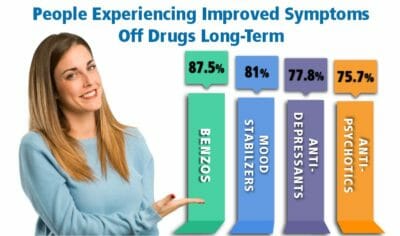
In the short term, drugs and medications may have created desirable effects. In a crisis situation, drugs can be necessary at times. But as tolerance develops, these positive effects diminish and negative side effects can become problematic. There has been a paradigm shift in recent years that is turning away from the disease-model in which long-term medication was the automatic first-line treatment.2,3
 ATMC takes a very different approach to long-term recovery and relief. In both addiction and mental health treatment, discovering root causes for unwanted symptoms can be life-changing. Each person’s profile will require such investigation through lab tests, interviews, and other assessments to find out what is at the root of a person’s unwanted symptoms. Then these can be addressed in real time, with a vast assortment of real and drug-free solutions.
As John Donne once said, “No man is an island.” We are constantly barraged by environmental factors whether social, marital, job-related, or other psychological stressors. And then there are chemical assaults through the pesticides, additives, or preservatives we may consume, mercury in dental work, toxic chemicals in the air or in our water, and the list goes on. All of these can have a potential for negative neurological impact. Neurological assaults can create a cascade of symptoms that persist over time. After all, most toxins are fat-soluble and will remain in the body until they are converted to water soluble, and then removed.4
Thankfully, toxic burden can be thoroughly addressed for relief if the proper protocols for neurotoxin removal are used.
And unlike short-term efficacy of drugs, logical and effective means of resolving these life stressors can create long-term, sustainable recovery. This approach is tried and true both in addiction and in mental health crises.
Tools for Recovery at ATMC are Tools for Rejuvenating Life
There are many tools that lend themselves well to the recovery process. Putting together a set of strategies are like your toolbox for both addiction or mental health recovery, and for all aspects of life. We are talking about renewal of joy, and rejuvenation of life itself.
For example, exercise is a powerful tool that can provide remarkable benefits in mental clarity, energy, and even pain relief. These benefits are often overlooked but well worth exploring. Consider outside walking, hiking, swimming, cycling, yoga, Qigong, rowing, sports, stretching, and any others that spark an interest. Research shows definite improvements for anxiety relief, alleviating depression, and gaining increased energy for day-to-day life.5
Adding activities in your daily or weekly regimen can enhance quality of life and can be easy to implement. Perhaps there are new or old hobbies that provide keen interest, and may provide opportunities for social interactions among people with similar interests. Music, art, reading, or other creative ventures might resonate. Exploring new activities might include volunteer work, meditation, gourmet cooking, fashion design, gardening, learning new skills in workshops, or exploring classes in local community education venues.
You may feel it’s time to revamp neglected spiritual interests, or find new ones that offer inspiration for you.
Life, moment to moment, and day-to-day, can be enriched in so many ways. Whether you start with something easy & comfortable, or dive in to something a bit more wild and exciting, just START! There’s much in life to be inspired by if we just start LIVING.6,7
Ongoing Counseling
Counseling can be extremely effective while in a treatment program, but also after leaving a program. Working with a trusted counselor can be key in sustaining long-term abstinence and designing strategies for mental wellness. Life can be thrown into disarray even after treatment — after all, it is not life that has changed, it is you and your skill set that needs to be strengthened.
Expect the unexpected. Be ready to meet it head on. Having counseling in place can help one overcome the challenges one may encounter. Counseling is a tool to keep at hand so that you can continue on your trajectory of success.8
Nutrition is Key in Recovery at ATMC
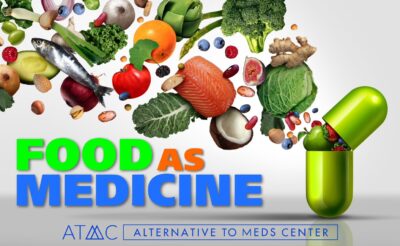 An enormous base of research has shown that maintaining a correct diet is another powerful way to support and improve health, both physical and mental. Knowing what to avoid is just as important.9
Go organic and avoid processed food as much as possible. A wide variety of good quality proteins, fruits, and vegetables provides the basic building blocks the body needs for repair and efficient operation. We’re talking about the central nervous system, proper hormone function, building muscle strength, cell integrity, and full function of every system in the body. Don’t shortcut the importance of a good diet regimen for the feel-good results that proper nutrition provides long-term.
Supplements play a vital role as well, as these are the activators and catalysts that enable coordination between the various systems in the body. Each vitamin and mineral have important jobs to do, especially the B vitamins, vitamins C, D, magnesium, zinc, and many others. A naturopath can guide in selection of both foods and supplements to make sure no deficits are occurring.
To prevent blood sugar spikes, avoid excessive sugar intake, and limit refined carbs.11 Taking 4 or 6 small meals over the day may be easier to digest than 1 or 2 heavy meals that leave one exhausted, not energized and refreshed.
Recovery at ATMC Can Involve Slow Medication Tapering
Support comes in many forms to ease the process of medication withdrawal and tapering. Working with an informed medical practitioner who understands proper tapering is essential. It’s taken decades for the drug companies to admit that medication withdrawal syndromes are real.10
Nowadays, no informed physician or psychiatrist would dare tell you it’s all in your head, or you’re imagining these things. Get knowledgeable help and be prepared to take it slow. Use a compounding pharmacy where very minute adjustments are needed. Let each dosage cut settle out before further reduction is attempted.
Slow is fast in medication tapering.
You can study more material and research on tapering on ATMCs website.
Importance of Cleansing Neurotoxins from the Body
One of the most transformative processes we know of is safely removing neurotoxins (both organic and inorganic) from the body. Neurotoxicity is associated with many mental health symptoms like depression, anxiety, insomnia, and others. ATMC has found through lab testing that neurotoxicity is present in the vast majority of our clients. Purging these accumulations of toxic residues needs to be addressed for long-term recovery of wellness. Through gentle chelation methods, sauna, nebulized glutathione treatments, and many other ways, these toxins can be safely removed — this can be life-changing all in itself.
Find Other Tools for Long-Term Recovery at ATMC
You are welcome to call us for a personal consult on strategies that may be helpful for you in your path to long-term recovery. We offer the highest level of inpatient care for mental health and addiction treatment that is available anywhere. You are invited to visit our services overview pages for a wealth of information on the types of inpatient services provided at ATMC.
See more information on safe medication tapering and medically supervised medication withdrawal and addiction treatment services.
We also understand that not everyone is a candidate for long-term inpatient treatment. Other resources you may find beneficial can be found by contacting IMMH.org and searching the database at AACAM.org for local services in your area.
if you or a loved one is looking for the kinds of treatments discussed above, please contact us by email or at the number on this page. We are here to help you on your journey to long-term success in recovery, not only in “Recovery Month” but all year round. Call us today and make your long-term recovery REAL!
learn more about Addiction Recovery at ATMC
Sources:
1. National Recovery Month | SAMHSA [cited 2025 Sept 15]
2. Blithikioti C, Fried EI, Albanese E, Field M, Cristea IA. Reevaluating the brain disease model of addiction. Lancet Psychiatry. 2025 Jun;12(6):469-474. doi: 10.1016/S2215-0366(25)00060-4. Epub 2025 Mar 25. PMID: 40154515. [cited 2025 Sept 15]
3. McCarthy C Medicines and Society: Systemic Change Needed to Address Overprescribing British Journal of General Practice 2025;75 (756):325-329. DOI: https://doi.org/10.3399/BJGP.2025.0050 [cited 2025 Sept 15]
4. Toxicology What are Common Psychiatric Symptoms Due to Toxic Exposure? published online 2024 [cited 2025 Sept 15]
5. Mahindru A, Patil P, Agrawal V. Role of Physical Activity on Mental Health and Well-Being: A Review. Cureus. 2023 Jan 7;15(1):e33475. doi: 10.7759/cureus.33475. PMID: 36756008; PMCID: PMC9902068. [cited 2025 Sept 15]
6. Priddy SE, Howard MO, Hanley AW, Riquino MR, Friberg-Felsted K, Garland EL. Mindfulness meditation in the treatment of substance use disorders and preventing future relapse: neurocognitive mechanisms and clinical implications. Subst Abuse Rehabil. 2018 Nov 16;9:103-114. doi: 10.2147/SAR.S145201. PMID: 30532612; PMCID: PMC6247953. [cited 2025 Sept 15]
7. Aletraris L, Paino M, Edmond MB, Roman PM, Bride BE. The use of art and music therapy in substance abuse treatment programs. J Addict Nurs. 2014 Oct-Dec;25(4):190-6. doi: 10.1097/JAN.0000000000000048. PMID: 25514689; PMCID: PMC4268880. [cited 2025 Sept 15]
8. Nakao M, Shirotsuki K, Sugaya N. Cognitive-behavioral therapy for management of mental health and stress-related disorders: Recent advances in techniques and technologies. Biopsychosoc Med. 2021 Oct 3;15(1):16. doi: 10.1186/s13030-021-00219-w. PMID: 34602086; PMCID: PMC8489050. [cited 2025 Sept 15]
9. Jeynes KD, Gibson EL. The importance of nutrition in aiding recovery from substance use disorders: A review. Drug Alcohol Depend. 2017 Oct 1;179:229-239. doi: 10.1016/j.drugalcdep.2017.07.006. Epub 2017 Aug 4. PMID: 28806640. [cited 2025 Sept 15]
10. Regina AC, Gokarakonda SB, Attia FN. Withdrawal Syndromes. 2024 Sep 2. In: StatPearls [Internet]. Treasure Island (FL): StatPearls Publishing; 2025 Jan–. PMID: 29083712. [cited 2025 Sept 15]
11. Shibeshi MS, Tolcha AG, Zerihun T. Psychiatric Manifestations of Hypoglycemia in an Adolescent: A Case Report. Clin Case Rep. 2025 Aug 8;13(8):e70773. doi: 10.1002/ccr3.70773. PMID: 40787164; PMCID: PMC12334273. [cited 2025 Sept 15]
Originally Published October 29, 2025 by Diane Ridaeus
Dr. John Motl, M.D.
Dr. Motl is currently certified by the American Board of Psychiatry and Neurology in Psychiatry, and Board eligible in Neurology and licensed in the state of Arizona. He holds a Bachelor of Science degree with a major in biology and minors in chemistry and philosophy. He graduated from Creighton University School of Medicine with a Doctor of Medicine. Dr. Motl has studied Medical Acupuncture at the Colorado School of Traditional Chinese Medicine and at U.C.L.A.
Social Profile: LinkedIn

Diane is an avid supporter and researcher of natural mental health strategies. Diane received her medical writing and science communication certification through Stanford University and has published over 3 million words on the topics of holistic health, addiction, recovery, and alternative medicine. She has proudly worked with the Alternative to Meds Center since its inception and is grateful for the opportunity to help the founding members develop this world-class center that has helped so many thousands regain natural mental health.